Published: June 25, 2026Updated: July 15, 2026Read Time: 10 min readBy Mauricio L.
Share:
Link Copied!Ready to share.
Shutter Cost (per window)$150 - $500
Impact Window (per window)$800 - $1,500
Fabric Screens (per sq ft)$25 - $45
Average Shutter Lifespan15 - 20 Years
Highlights
[ NOTE // 01 ]
Hurricane shutters cost $150-$500 per window ($5,000-$15,000 whole home) depending on the style (accordion, roll-down, panel, colonial). Impact windows are significantly more expensive at $800-$1,500 per window ($15,000-$30,000 whole home) but offer permanent, year-round benefits and higher ROI. Fabric hurricane screens are a lightweight, transparent alternative costing $25-$45/sq ft.
Hurricane season arrives every year like clockwork (to prepare your entire property, check out our 2026 hurricane season home prep guide), and with it comes the same anxious ritual: Will this be the year a storm tests my home's defenses? For coastal homeowners, window protection isn't optional: it's the difference between a house that survives and a house that becomes a casualty.
You have two main options: impact-resistant windows (permanent, expensive, invisible) or hurricane shutters (temporary or permanent, affordable, visible). Whole-home window replacement can be estimated with our window replacement cost calculator. Impact windows cost $15,000-$30,000 for a whole home. Hurricane shutters cost $5,000-$15,000. That's a 2-3x price difference.
But protection is only part of the equation. Impact windows provide year-round benefits (energy savings, noise reduction, UV blocking) that shutters can't match. Shutters require manual deployment, someone has to be home to crank them down or bolt panels in place before every storm.
This comparison breaks down the real costs, protection levels, and lifestyle tradeoffs so you can choose wisely.
Impact Windows: Permanent Protection
Installed cost: $800-$1,500 per window. A typical 2,000 sq ft home with 20-25 windows costs $15,000-$30,000 fully installed.
What you're paying for:
Laminated glass: Two layers of glass bonded with a PVB (polyvinyl butyral) interlayer. When impacted, glass may crack but stays bonded to the interlayer, no dangerous shards.
Reinforced frames: Aluminum or vinyl frames with internal steel reinforcement. Anchored directly into wall studs or concrete.
UV protection: Blocks 99% of UV rays. Protects furniture, flooring, and artwork from fading.
Adds home value: Buyers appreciate the upgrade. Can recoup 60-70% of costs at resale.
Insurance discounts: 10-25% off windstorm premiums in most coastal states.
No storage needed: Unlike panel shutters, nothing to store or maintain when not in use.
Impact Window Cons
High upfront cost: $15,000-$30,000 is a major investment. Financing often required.
Professional installation only: DIY installation voids certification and insurance discounts.
Can't be removed: If you move, you can't take them with you. They're part of the home.
Potential overkill: If you're not in a high-velocity hurricane zone, the expense may not be justified.
Hurricane Shutters: Traditional Protection
Average cost: $15-$50 per square foot of window/door opening, translating to roughly $150 to $500 per window depending on the size and type of shutter. A standard 2,000 sq ft home costs $5,000-$15,000 to fully equip with shutters.
Shutter Type
Cost / Sq Ft
Avg. Cost / Window
Deployment Effort
Storm Panels (Metal/Poly)
$10 - $20
$100 - $250
High (Manual installation required)
*Accordion Shutters*
$20 - $30
$200 - $400
Low (Slide and lock in seconds)
Bahama / Colonial
$25 - $35
$250 - $600
Low-Medium (Hinged system)
Roll-Down (Motorized)
$35 - $60
$400 - $1,000+
Very Low (Push of a button)
Hurricane Screens vs. Shutters Cost
An increasingly popular alternative to traditional metal shutters is the deployment of fabric hurricane screens. Made from high-strength geosynthetic PVC-coated fibers, these screens are lightweight, transparent, and absorb massive kinetic impacts (like flying tree branches).
Cost Comparison: Fabric screens cost $25 to $45 per square foot. While more expensive than basic aluminum panel shutters ($15–$25/sq ft), they are highly competitive with mid-tier accordion shutters.
Aesthetic & Light Benefits: Unlike metal storm shutters, which create a dark, claustrophobic "cave" effect inside the home when closed, hurricane screens block wind and rain while allowing natural daylight to pass through.
Ease of Storage: Hurricane fabric panels roll up tightly or fold away easily, requiring significantly less storage space in your garage compared to bulky steel or aluminum panels.
To estimate what a complete window replacement or upgrade to impact glass would run for your home, run your dimensions through our Impact Windows Cost Calculator.
Shutter types detailed breakdown:
Colonial/panel shutters: Removable panels (plywood, aluminum, or steel) that bolt over window tracks. Must be stored when not in use. Highly labor-intensive to deploy before a storm.
Bahama shutters: Hinged at the top of the window frame, propping open with support rods. They provide architectural charm and shade year-round, closing quickly when needed.
Accordion shutters: Fold away compactly beside windows. You pull them across the opening and latch them in the center when a storm approaches.
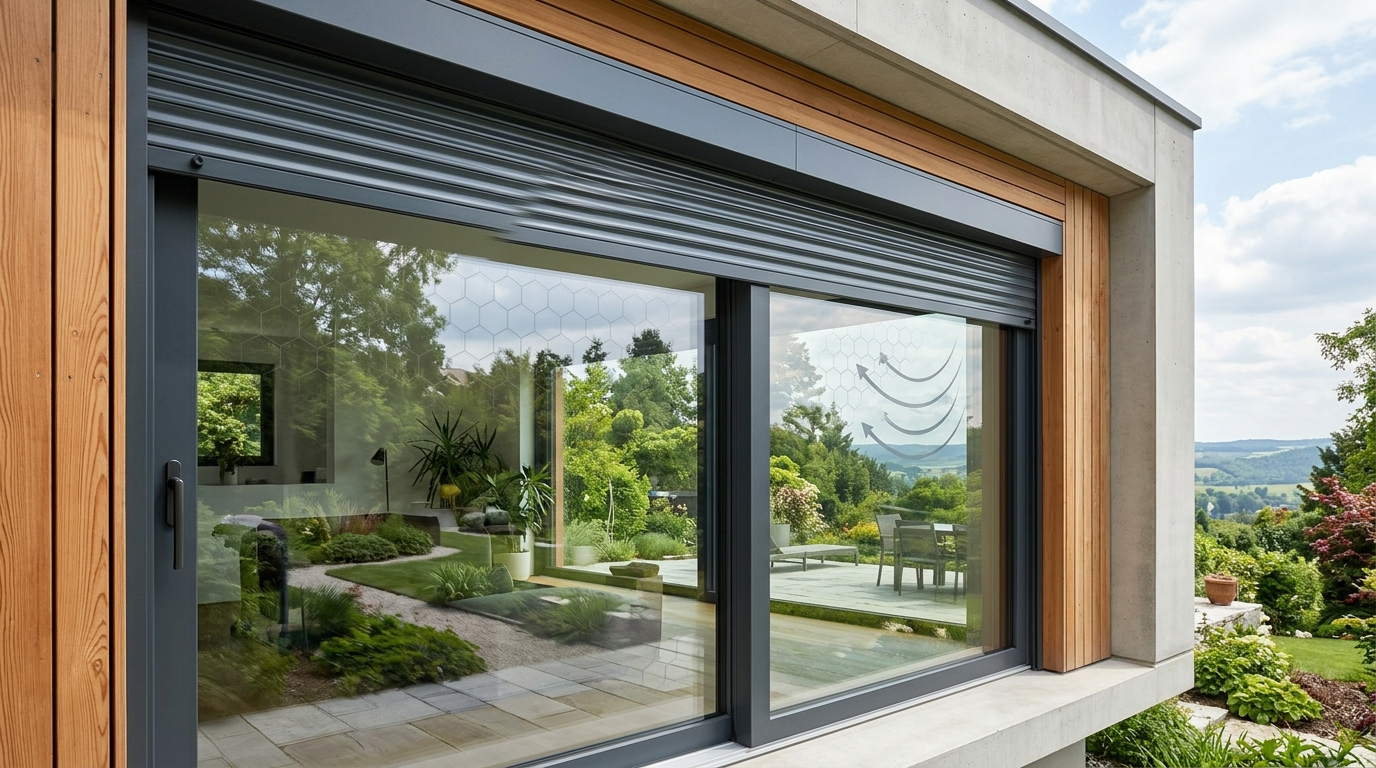
Roll-down shutters: Motorized or manual crank systems that retract into an enclosed box above the window. This is the ultimate convenience but has the highest price tag.
Hurricane Shutter Pros
Lower upfront cost: 50-70% cheaper than impact windows.
Effective protection: Properly installed shutters provide equivalent storm protection to impact windows.
Portable (some types): Panel shutters can be taken with you when you move.
Shade and privacy: Bahama and colonial shutters provide shade when deployed.
DIY options: Panel shutters can be self-installed by handy homeowners.
Hurricane Shutter Cons
Manual deployment: Someone must be home to close shutters before storms. If you evacuate early, windows are unprotected.
Storage requirements: Panel shutters need garage or shed space for 10-11 months per year.
Maintenance: Tracks need cleaning, motors need servicing, panels get scratched and dented.
No energy benefits: Shutters only provide insulation when closed (during storms). No year-round savings.
Don't add home value: Buyers see shutters as functional, not as upgrades.
Aesthetic impact: Some homeowners associations restrict or ban certain shutter types.
Cost Comparison: 10-Year Ownership
Upfront cost tells only part of the story:
Impact Windows (10 Years)
Initial cost: $20,000 (average 20-window home)
Energy savings (10 years): -$6,000 ($50/month reduced cooling/heating)
Insurance savings (10 years): -$5,000 ($500/year at 20% discount)
Maintenance: $500 (occasional seal inspection, track cleaning)
Shutters remain cheaper over 10 years, but impact windows close the gap significantly through energy and insurance savings. Add resale value (impact windows add 60-70% of cost to home value; shutters add nothing), and the financial gap narrows further.
Protection Comparison: Which Stops Hurricanes Better?
Both options, when properly certified, provide equivalent storm protection:
Wind resistance: Both rated for 130-180 mph depending on certification level.
Impact resistance: Both must pass 2x4 lumber impact at 50+ fps.
Pressure cycling: Both tested for 9,000+ wind pressure cycles.
The difference isn't protection: it's reliability. Impact windows are always active. Shutters require human action. If you're out of town when a storm rapidly intensifies (like Hurricane Ian in 2022), your shutters stay open and your windows are vulnerable.
When to Choose Impact Windows
Impact windows are worth the cost if: This is your primary residence and you plan to stay 10+ years, you travel frequently or have a secondary home (can't manually deploy shutters), you want year-round benefits (energy savings, noise reduction), you're concerned about home resale value, or you live in a high-velocity hurricane zone (Miami-Dade, Broward, coastal areas).
When to Choose Hurricane Shutters
Shutters make sense if: You're on a tight budget and can't afford $20,000+, you're always home during hurricane season (can deploy shutters manually), this is a secondary property or rental (don't need resale value), you're in a moderate-risk area (not high-velocity zone), or you prefer traditional aesthetics (Bahama shutters add Caribbean charm).
The Hybrid Approach
Some homeowners split the difference:
Install impact windows on ground floor (most vulnerable to debris).
Use shutters on second floor (less exposure, cheaper to protect).
Or: Impact windows on street side (aesthetics), shutters on backyard side (cost savings).
This approach reduces costs while maintaining protection where it matters most.
The Verdict: Which Protection is Best for Your Home?
Impact windows are premium, permanent protection with lifestyle benefits beyond storm safety. They're expensive but deliver value through energy savings, insurance discounts, noise reduction, and resale appeal.
Hurricane shutters are practical, affordable protection without frills. They work just as well in storms but require manual effort and provide no additional benefits.
If you'll be in your home for 15-20 years, impact windows are worth the investment. If you're on a budget or might move within 10 years, shutters provide equivalent protection at half the cost.
Frequently Asked Questions
How much do hurricane shutters cost per window?▼
The cost per window typically ranges from $150 to $500. Standard storm panels (steel or aluminum) are the cheapest option at $100–$250 per window. Accordion shutters cost $200–$400 per window. Bahama and colonial shutters run $250–$600 per window, and roll-down motorized shutters are the most expensive, ranging from $400 to $1,000+ per window.
How do fabric hurricane screens compare to metal shutters?▼
Fabric hurricane screens (made of high-strength geosynthetic fabric) are lightweight, transparent, and easy to deploy. They cost $25–$45 per square foot, which is slightly more than basic metal storm panels ($15–$25/sq ft) but comparable to accordion shutters. Unlike metal shutters, they allow natural light into the home and do not create a blackout effect during a storm.
Do impact windows save more on energy bills than shutters?▼
Yes. Impact windows provide year-round energy insulation through double-paned low-E glass, reducing cooling and heating costs by 10% to 20% annually. Hurricane shutters only provide insulation when closed during a storm, providing no energy savings during the rest of the year.
§
Research Citations & Verified Authorities
EEAT Compliant
To maintain absolute calculation integrity and trust, the structural lifespans, standard sizes, and pricing models in this guide are gathered from governing construction authorities and verified trade standards.
Florida Building Code - Impact Protection StandardsAudit Source →
Miami-Dade County Product Control DivisionAudit Source →
Insurance Information Institute - Hurricane MitigationAudit Source →
Mauricio L.
// Creator of Meazora
Mauricio L. is a software developer who loves working with his hands. He built Meazora because he was tired of online calculators that exist just to capture your email and phone number. Every calculator here runs completely in your browser to keep your planning private, fast, and simple.