Cost to Replace Siding: 2026 Siding Replacement Cost Guide
Published: June 20, 2026Updated: July 2, 2026Read Time: 9 min readBy Mauricio L.
Share:
Link Copied!Ready to share.
Vinyl Siding / SF$4.00-$8.00
Fiber-Cement / SF$8.00-$14.00
Wood Siding / SF$9.00-$16.00
Avg. ROI at Resale70%-80%
Highlights
[ NOTE // 01 ]
Vinyl siding costs $4–$8/SF installed; fiber-cement costs $8–$14/SF; wood siding $9–$16/SF. Old siding removal, sheathing repair, and trim replacement are frequently excluded from initial per-SF quotes, confirm what's included before comparing bids. Siding removal exposes wall sheathing, which is the only practical time to add continuous rigid foam insulation without a full wall disassembly.
Siding replacement is a project where the visible cost, the per-square-foot rate on a quote, frequently understates the actual total. Old siding removal, sheathing repair if damage is found underneath, trim and soffit replacement, and proper window flashing are all separate line items that may or may not appear in an initial bid.
It's also one of the few home improvement projects that creates a secondary opportunity: exposing the wall sheathing allows continuous insulation to be added to the exterior of the framing, something that's essentially impossible to do without removing the siding at some point.
Summary
Vinyl: $4–$8/SF installed, 20–30 year lifespan. Fiber-cement: $8–$14/SF, 30–50 years, fire- and rot-resistant. Wood: $9–$16/SF, 25–40 years with regular painting. Old siding removal ($1,000–$3,000), sheathing repair (variable), and trim replacement are often not included in headline per-SF rates. Confirm what's in any bid before comparing across contractors.
Cost ranges from Meazora 2026 installer data. Lifespan estimates per VSI and James Hardie installation guidelines.
What this article covers:
Material comparison: vinyl, fiber-cement, and wood by cost and lifespan
Continuous insulation: the one-time opportunity created by siding removal
Line items frequently missing from initial quotes
What to look for in the wall sheathing before new siding goes up
Material Comparison: Cost, Lifespan, and Maintenance
Siding Material
Installed Cost / SF
Service Life
Maintenance
Vinyl
$4.00-$8.00
20-30 Years
Occasional washing only
Fiber-Cement (James Hardie, etc.)
$8.00-$14.00
30-50 Years
Paint every 8-15 years
Natural Wood (Cedar/Redwood)
$9.00-$16.00
25-40 Years
Paint/stain every 4-5 years
Cost ranges from Meazora 2026 installer data. Service life estimates per VSI and James Hardie installation guidelines.
Fiber-cement's 30–50 year lifespan and paint retention advantage become meaningful when compared to vinyl's 20–30 year ceiling. Vinyl cannot be repainted when it fades, replacement is the only option. Fiber-cement holds paint for 8–15 years per James Hardie's published specifications, and when it does need repainting, the substrate remains sound. Over a 40-year ownership period, a fiber-cement exterior typically requires one paint cycle (you can review cost details in our exterior house painting cost guide); vinyl may require two full replacements.
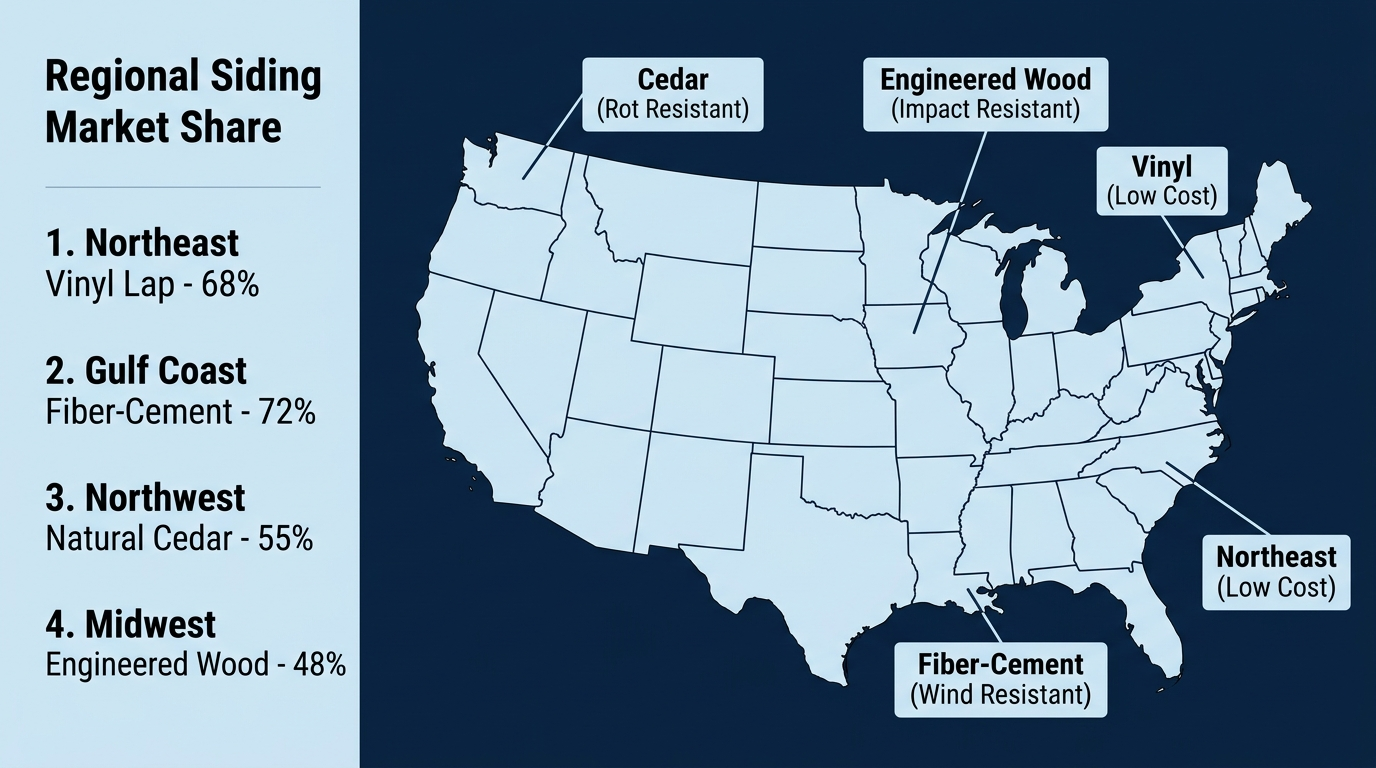
Regional Popularity of Siding Materials
Siding choice varies significantly by region due to climate constraints and regional building trends. In the Gulf Coast, storm resistance dictates materials, whereas the Northeast values low upfront costs. See the regional distribution map below.
🔌 Share This Map on Your Site (Embed Code)▼
The Continuous Insulation Opportunity
Standard stud-cavity insulation (fiberglass batts or blown-in) fills the spaces between studs. The studs themselves remain as thermal bridges, wood conducts heat at roughly 1 BTU/hr·ft·°F, compared to less than 0.025 for rigid foam. In a typical 2x4 stud wall, studs account for roughly 25% of the wall area and bypass a significant portion of the cavity insulation's value.
Adding a continuous layer of rigid foam board (XPS, EPS, or mineral wool) over the exterior sheathing before new siding goes up eliminates this bridging path. A 1/2-inch layer of XPS provides approximately R-3 of additional insulation with no thermal bridging. A 1-inch layer provides approximately R-5.
The practical constraint: continuous insulation requires extending window and door jambs to account for the added wall thickness, and requires longer fasteners for the siding. Both add some labor cost. For most siding replacement projects, the incremental material and labor cost of adding rigid foam board runs $1.50–$4/SF depending on thickness and product.
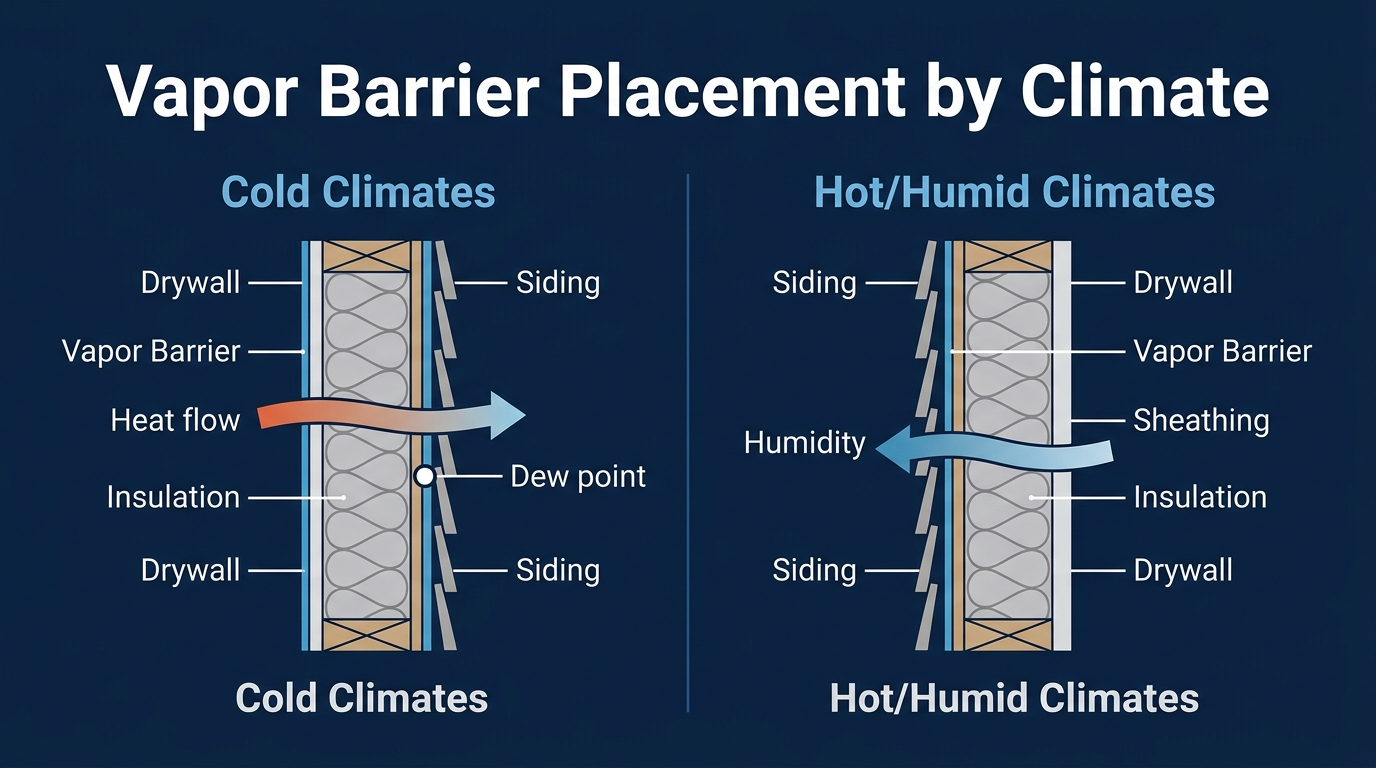
Vapor Barrier & Dew Point Physics by Climate
Managing moisture infiltration depends entirely on your geography. In cold northern climates, the vapor barrier must stay on the interior side (behind the drywall) to keep interior humidity out of the framing. In hot, humid climates, the vapor barrier belongs on the exterior (behind the siding). Refer to the climate physics diagram below.
🔌 Share This Diagram on Your Site (Embed Code)▼
Line Items Frequently Missing from Initial Bids
These costs are often not included in headline per-SF quotes. Ask specifically whether each is covered before comparing bids:
Old siding removal and disposal: Stripping existing siding and hauling it away typically runs $1,000–$3,000 depending on the home's size and the existing material (vinyl strips faster than nailed wood). Always confirm whether removal is included.
Sheathing repair: If moisture has damaged the plywood sheathing underneath, affected sections must be replaced before new siding goes up. The extent is unknown until removal, which is why this is often quoted as an allowance or hourly rate rather than a fixed price.
Trim and soffits: Fascia boards, soffits, and corner trim are frequently replaced at the same time as siding, especially if they're wood that has absorbed moisture. Often this coincides with gutter work (see our gutter replacement cost guide for details). Confirm whether trim work is in scope.
Window and door flashing: Proper water management at window and door perimeters requires flashing that integrates with the weather-resistant barrier behind the siding. If existing flashing is corroded or improperly installed, this is addressed during siding replacement, but the cost needs to be in the bid.
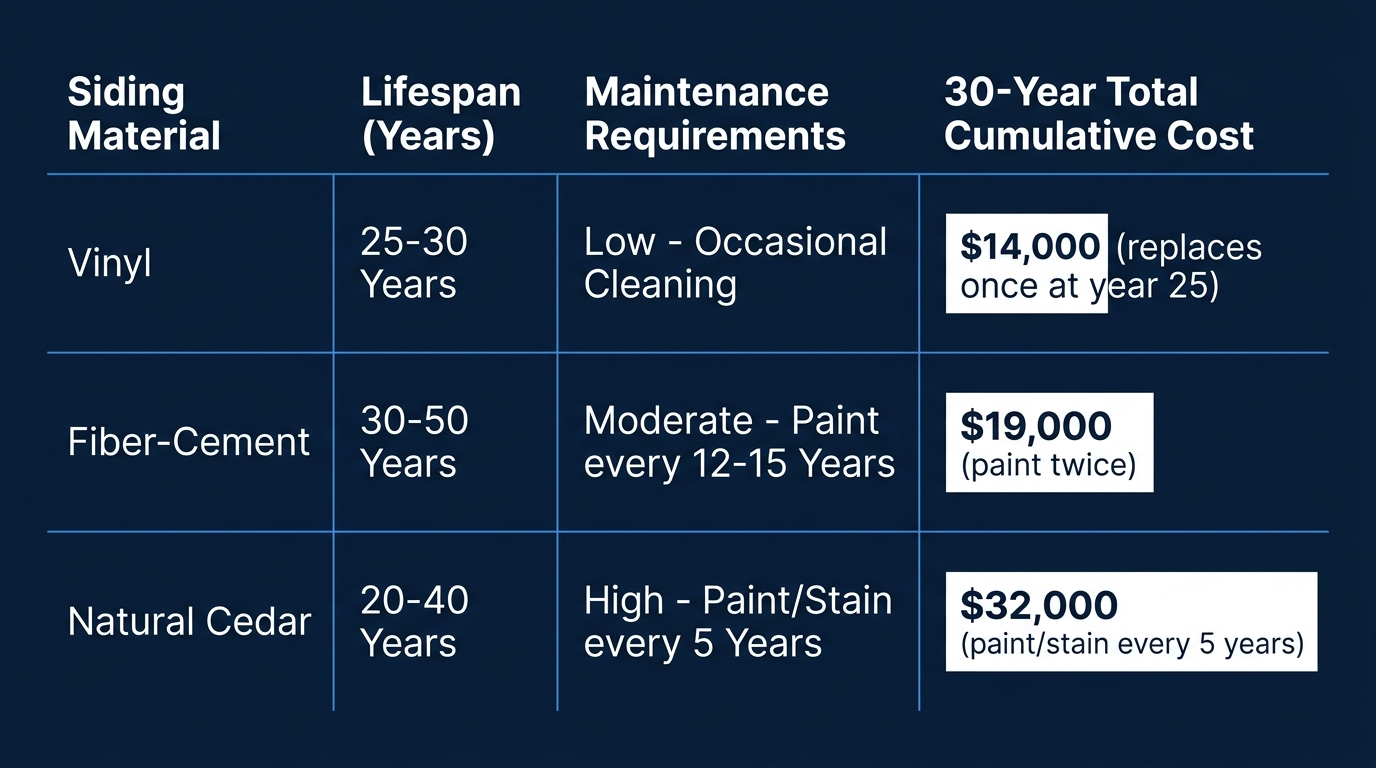
30-Year Lifecycle Cost Analysis
An initial low quote for natural wood or vinyl can be misleading. Over a 30-year lifecycle, maintenance cycles (painting, sealing, or premature material failure/replacement) can double the total investment. Review the comparative lifecycle analysis below.
🔌 Share This Comparison Chart on Your Site (Embed Code)▼
What to Inspect When Siding Is Removed
The point at which old siding is off but new siding hasn't gone up yet is the only time sheathing condition is fully visible. Before new siding installation begins, the exposed sheathing should be inspected for:
Soft spots or discoloration indicating moisture infiltration behind the previous siding
Deterioration of the weather-resistant barrier (housewrap) that should be present between sheathing and siding
Gaps at penetrations, where pipes, cables, or vents pass through the wall, that need to be sealed before new siding covers them
Any issues found at this stage are best addressed before new siding goes up. Covering damaged sheathing with new siding doesn't stop the underlying moisture problem: it hides it until the damage reaches the interior.
Home Renovation Return on Investment (ROI)
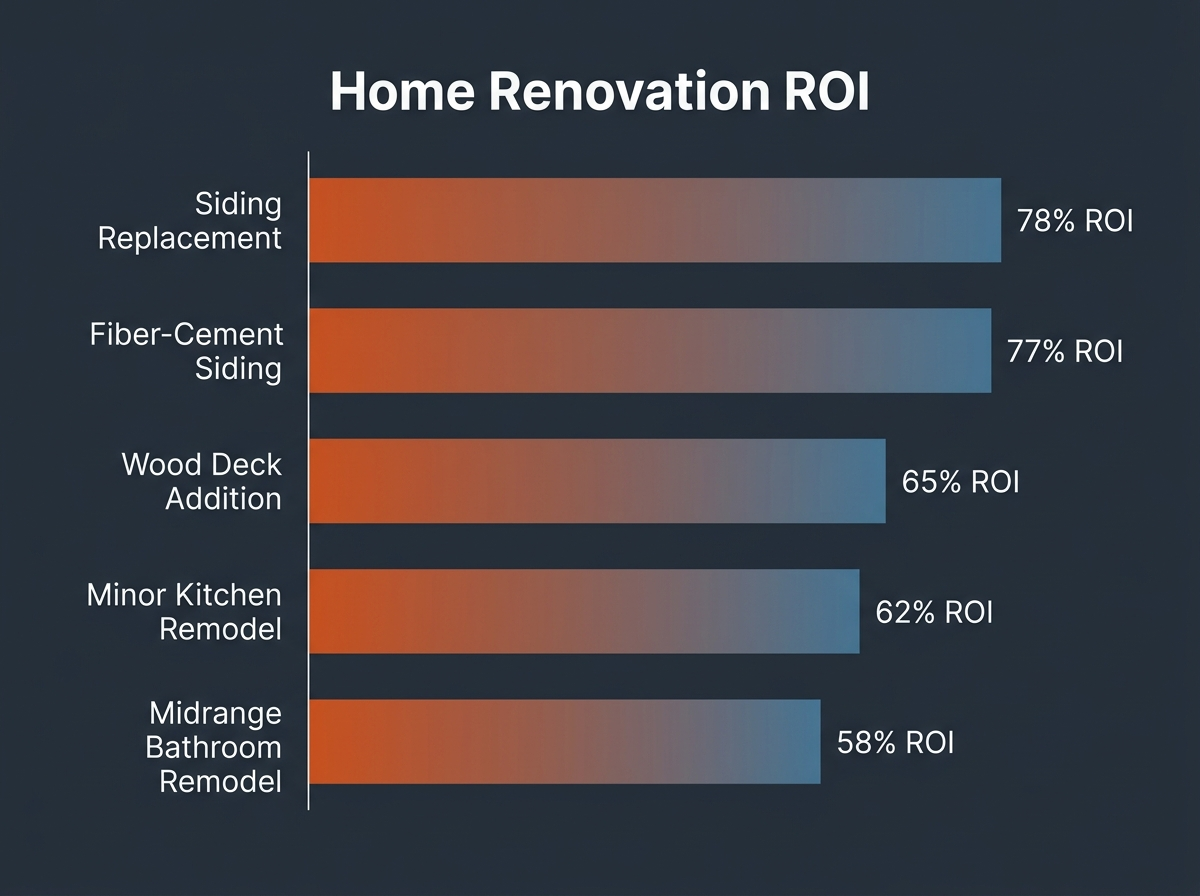
Siding replacement consistently ranks as one of the highest yielding home improvement investments, returning more value at resale than major interior remodels. Review our comparative ROI chart below to see how siding replacement stack up against other upgrades.
Siding replacement exposes the wall sheathing: the only practical opportunity to add continuous rigid foam board insulation before new siding goes on. Standard stud-cavity insulation leaves the studs themselves as thermal bridges (wood conducts heat significantly better than insulation). A 1/2-inch layer of XPS or EPS board over the sheathing creates a continuous thermal break across the entire wall surface, increasing effective R-value by R-3 to R-6. The added cost is approximately $1–$3/SF in materials. This cannot easily be added later without removing the siding again.
How long does siding installation take?▼
A professional crew on a standard 2,000 SF home typically completes vinyl in 5–7 days, fiber-cement in 7–10 days (it requires special cutting tools and more fasteners per course), and wood siding in 10–14 days. These timelines extend if sheathing repair is needed before new siding goes up. Confirm your contractor's timeline in writing, as weather and crew size affect actual completion.
§
Research Citations & Verified Authorities
EEAT Compliant
To maintain absolute calculation integrity and trust, the structural lifespans, standard sizes, and pricing models in this guide are gathered from governing construction authorities and verified trade standards.
Vinyl Siding Institute (VSI) - Installation Standards and GuidelinesAudit Source →
James Hardie Building Products - Installation RequirementsAudit Source →
Mauricio L.
// Creator of Meazora
Mauricio L. is a software developer who loves working with his hands. He built Meazora because he was tired of online calculators that exist just to capture your email and phone number. Every calculator here runs completely in your browser to keep your planning private, fast, and simple.