Deck Building Costs: Material Comparison, Permitting, and What Contractors Don't Always Quote
Deck construction costs $15–$35/SF for pressure-treated wood and $35–$65/SF for composite installed. Railings, stairs, and footings are typically priced separately and frequently omitted from initial per-SF quotes. Decks above 30 inches off grade require permits in most jurisdictions. The ledger board attachment, where the deck connects to the house, is the most structurally critical detail in the entire project.
Per-square-foot deck quotes don't always include the same things. Some contractors quote decking boards and framing only. Others include railings, stairs, footings, and permit fees. Getting an accurate total requires knowing which components are in the quote and which aren't, because railings alone add $30–$90 per linear foot, and an unquoted stair run can add $1,000–$2,000 to the final invoice.
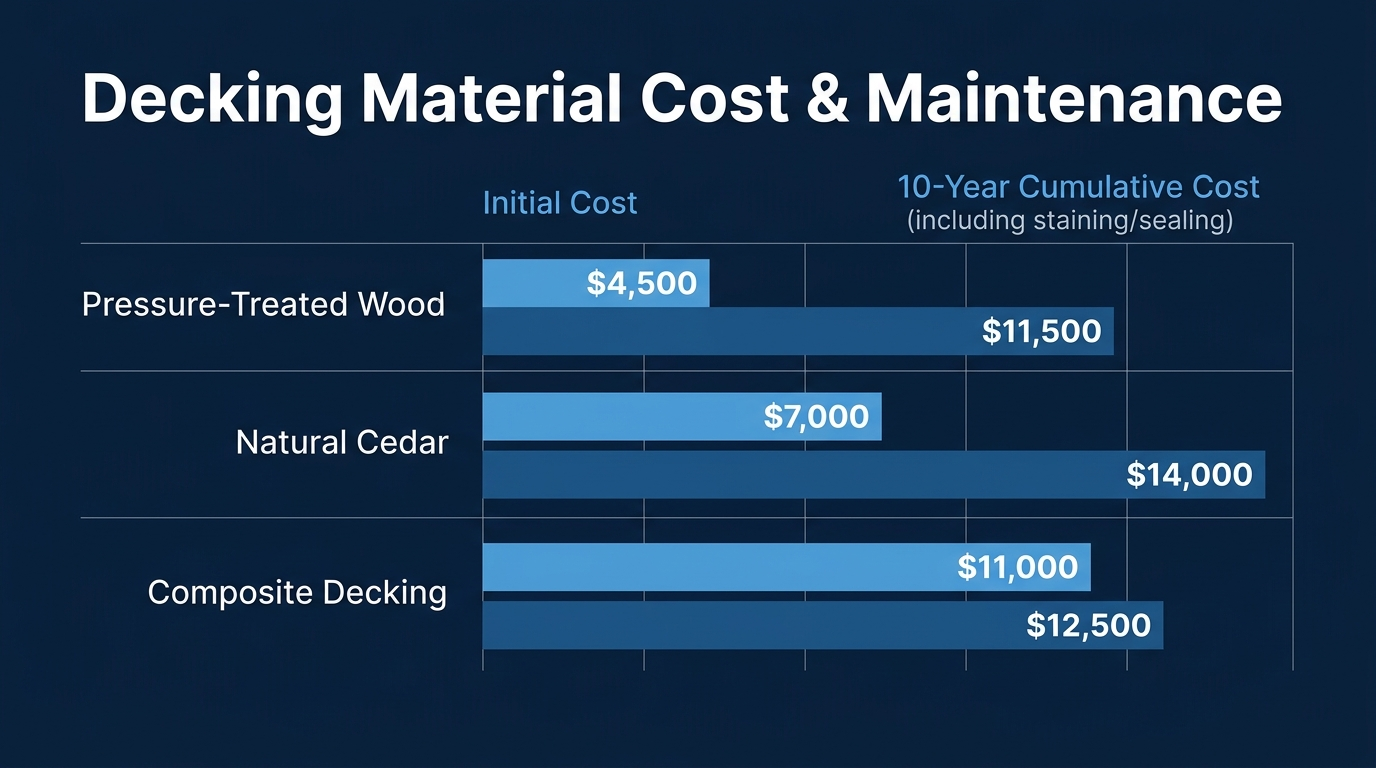
Material choice also changes the total cost in a way that isn't obvious from the headline per-SF rate: pressure-treated wood costs least upfront but requires the most maintenance over time. Composite costs more initially but requires almost no maintenance over its 25–30 year lifespan. The 30-year total cost of ownership often favors composite despite its higher initial price.
Pressure-treated wood: $15–$35/SF installed, 10–15 year lifespan with regular staining. Composite: $35–$65/SF, 25–30 year lifespan, minimal maintenance. Hardwood (Ipe): $45–$80/SF, 40–50 years. Railings, stairs, and footings are typically separate line items. Most jurisdictions require a permit for decks above 30 inches off grade.
Cost ranges from HomeCalc Pro 2026 installer data. Lifespan estimates per NADRA consumer resources.
What this article covers:
- Material comparison across cost, lifespan, and maintenance
- The ledger board: the structurally critical detail in attached decks
- Hidden line items: railings, stairs, and footings
- Permit and code requirements by deck height
Material Comparison: Upfront Cost vs. Long-Term Cost
| Material | Cost / SF Installed | Service Life | Maintenance |
|---|---|---|---|
| Pressure-Treated Wood | $15-$35 | 10-15 Years | Stain every 2-3 years |
| Cedar / Redwood | $25-$45 | 15-20 Years | Stain every 3 years |
| Composite (Trex, TimberTech) | $35-$65 | 25-30 Years | Occasional washing only |
| Hardwood Ipe | $45-$80 | 40-50 Years | Annual oiling to maintain color |
Cost ranges from HomeCalc Pro 2026 installer data. Service life estimates per NADRA and AWC DCA 6 guide.
The 10-year cost difference between pressure-treated wood and composite narrows significantly when maintenance is factored in. Staining a 400 SF deck every 2–3 years runs $300–$700 in materials and labor each cycle, $1,500–$3,500 over 15 years before replacement. You can estimate materials and total budget with our deck cost calculator. A composite deck at the same size has essentially no maintenance cost over 25 years. For homeowners planning to stay long-term, the composite premium frequently pays back.
The Ledger Board: The Most Structurally Critical Detail
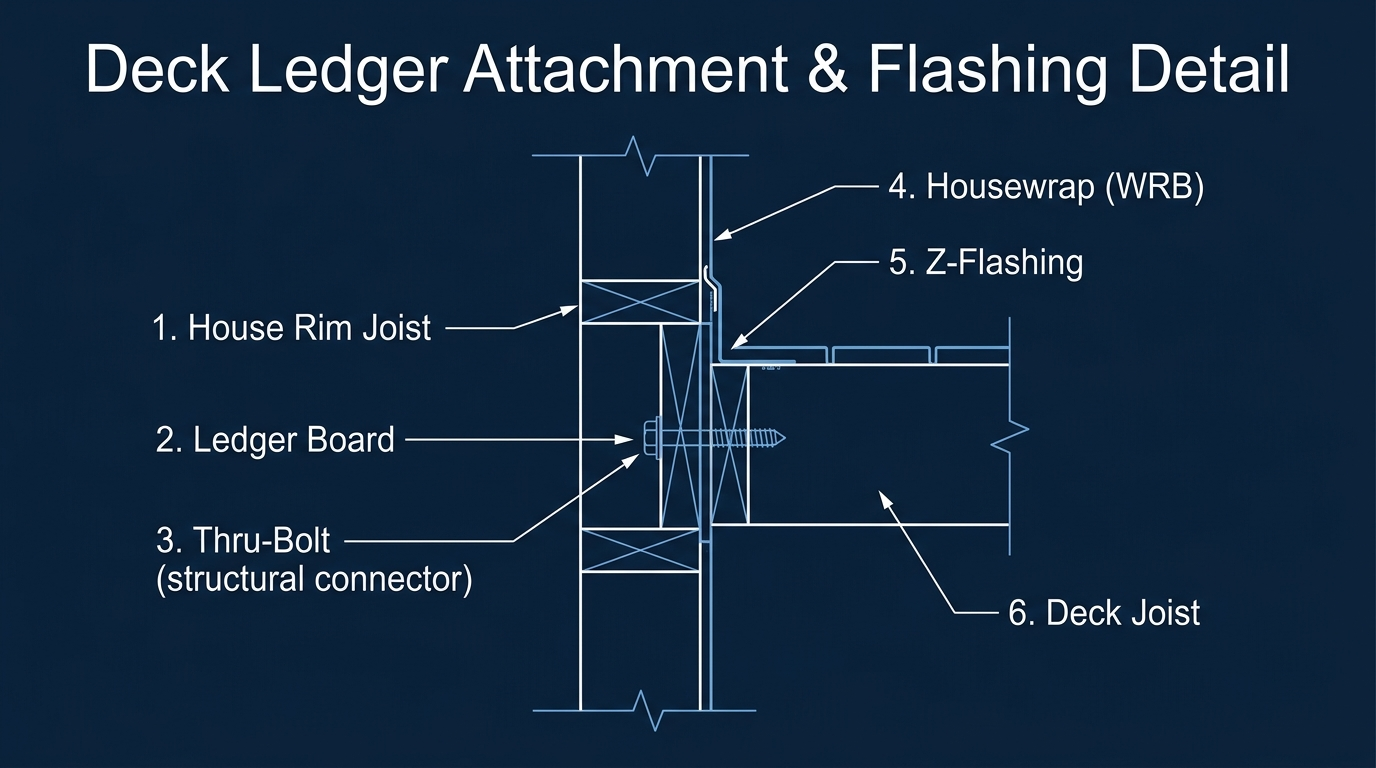
An attached deck connects to the house through a ledger board, a horizontal structural member fastened to the house rim joist or band joist. The ledger carries a significant portion of the deck's live load (people and furniture) and transfers it to the house structure.
Per the AWC Prescriptive Residential Wood Deck Construction Guide (DCA 6), the ledger must be attached with through-bolts or structural lag screws at specified intervals and must be flashed to prevent water infiltration at the connection point. The house siding must be removed to allow direct wood-to-wood contact; attaching a ledger over siding is not permitted per IRC and most local codes.
Flashing is not optional. Water that penetrates the ledger-to-house connection saturates the rim joist and wall framing behind it. Rot at this location is often invisible until the deck has structurally separated from the house. Most deck structural failures originate at the ledger connection, per NADRA safety documentation.
Line Items Frequently Missing from Initial Quotes
Railings, stairs, and concrete footings are the three components most often quoted separately, or not at all, in initial per-SF bids. Confirming they're included before comparing quotes is important.
Railings: Required by building code for decks 30 inches or more above grade. Guard railings must be at least 36 inches high (42 inches for decks above 30 feet off grade) with balusters spaced no more than 4 inches apart per IRC. Installation cost runs $30–$90 per linear foot depending on material (composite, aluminum, glass) and style.
Stairs: A single exterior stair run adds $1,000–$2,500 depending on height and material. Multiple access points or curved stair designs cost more. Stairs also require their own footings at the base.
Footings: Concrete piers must be poured below the frost line and typically cost $200–$500 per footing in labor and materials, depending on depth and diameter. A 12x16 deck typically needs 6 footings.
Estimate Your Deck Building Budget
Enter your deck dimensions and material preferences to estimate lumber, labor, and total project costs with our free Deck Cost Calculator.
Hidden Fasteners vs. Face Screws
Face screwing, driving screws directly through the top surface of each board, is the fastest installation method. Exposed screw heads collect water, accelerating the decay around each penetration point and creating a surface that's hard to clean without catching on bare feet.
Hidden fastener systems clip into grooved edges on the sides of decking boards. No fasteners are visible from above, no water pools around screws, and the deck surface is continuous and smooth. The trade-off: hidden fasteners cost more per linear foot in materials and add some labor time. For composite decking especially, most manufacturers offer or require hidden fastener systems as part of their warranty compliance.
To estimate your project's total material quantities and installed cost, use our Deck Cost Calculator.
Research Citations & Verified Authorities
EEAT CompliantTo maintain absolute calculation integrity and trust, the structural lifespans, standard sizes, and pricing models in this guide are gathered from governing construction authorities and verified trade standards.
Recommended Guides

Roof Lifespan by Material: Asphalt, Metal, Tile, and Slate
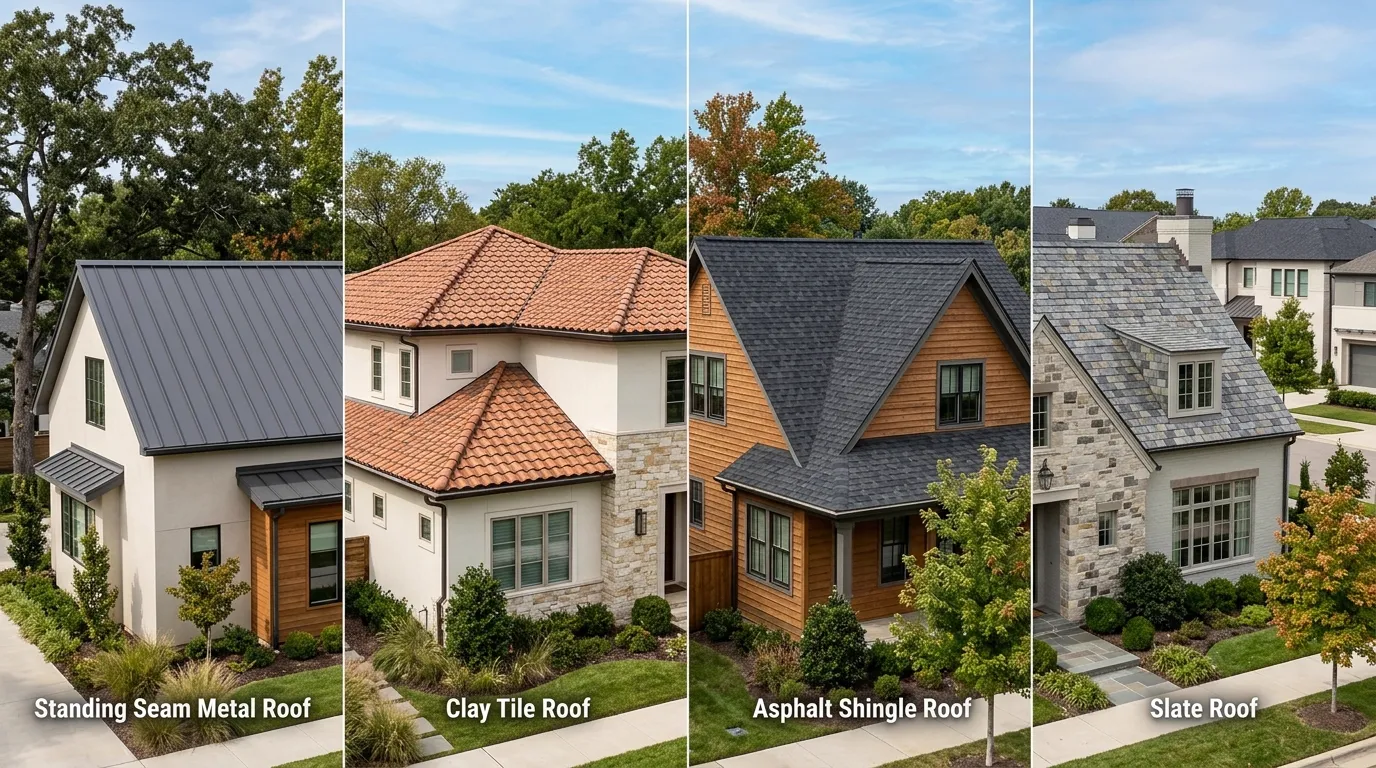
Asphalt shingles, metal panels, clay tile, and natural slate each fail for different reasons and on different timelines. Here's what actually determines how long each material lasts in real conditions.

How to Tell If Your Roof Is Actually Failing
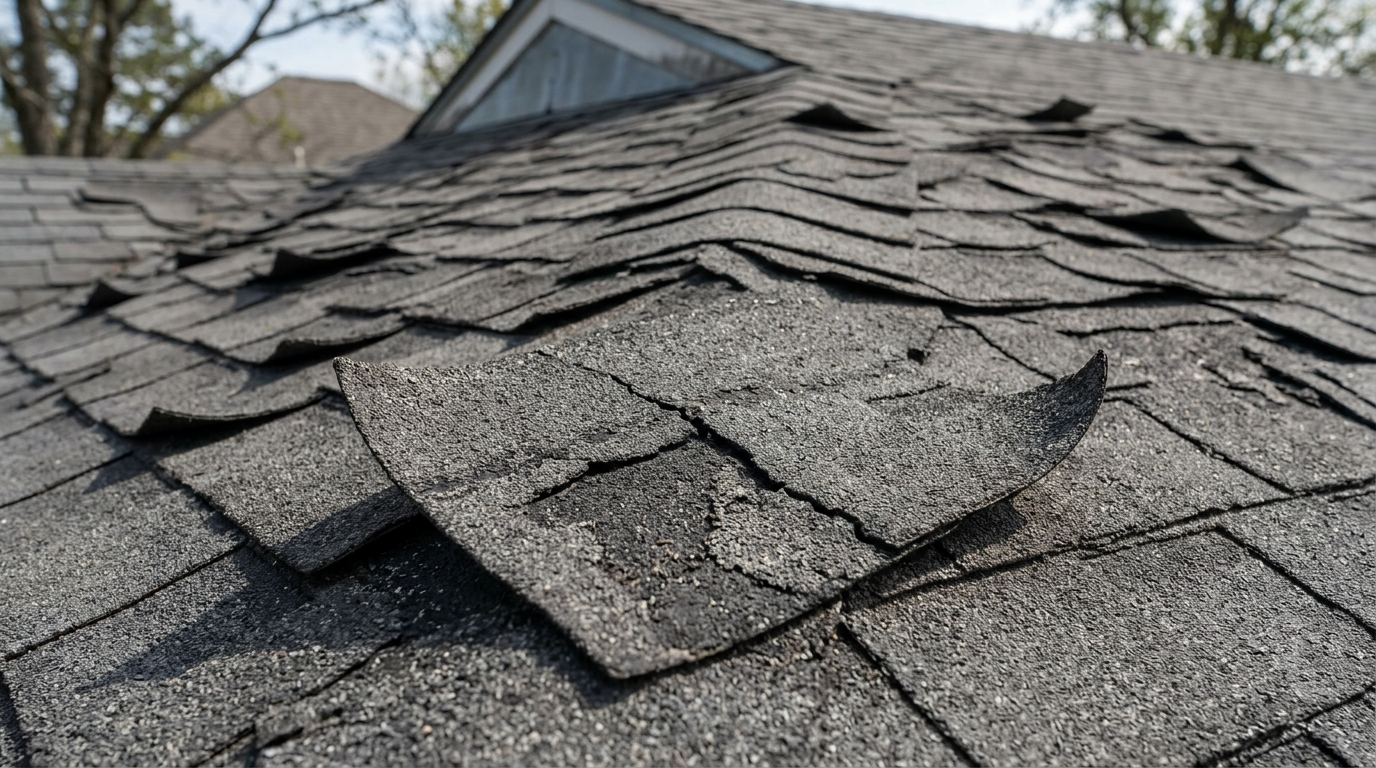
Curling shingles, granules in the gutter, light through the attic, learn which warning signs mean a repair can buy you time and which mean the clock has already run out.

HVAC Replacement Cost: System Types, Sizing, and What Moves the Price
HVAC replacement runs $5,000–$14,000 for most homes in 2026. The price depends on system type, capacity, and ductwork condition, not just square footage. Here's what each decision costs.