Heat Pump vs. Central AC: The Decision That Depends on Where You Live
Published: June 23, 2026Updated: June 29, 2026Read Time: 9 min readBy Mauricio L.
Share:
Link Copied!Ready to share.
Heat Pump Installed$7,000-$16,000
Central AC Installed$6,000-$12,500
Federal Tax CreditUp to $2,000
Heat Pump Efficiency DropBelow 30°F
Highlights
[ NOTE // 01 ]
A central AC cools only: it needs a separate furnace to heat. A heat pump handles both by reversing its refrigerant flow. In moderate climates, a heat pump typically replaces two systems with one. In cold northern climates, it becomes a question of local gas versus electricity rates. Neither system is universally better.
Topic Cluster Hub Guide
This guide is a specialized spoke of our comprehensive HVAC System Sizing & Cost Guide→. Check it out for all calculations, material sizing, and industry standards.
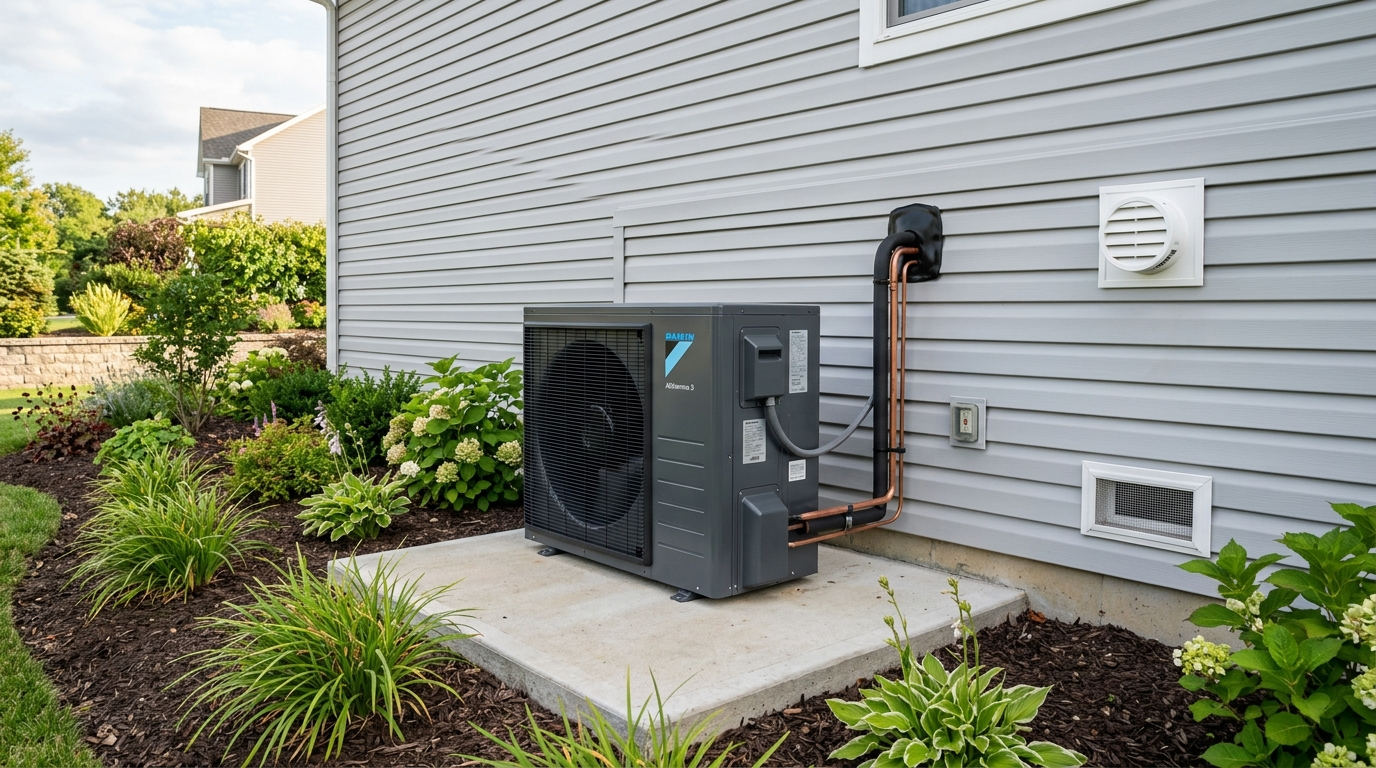
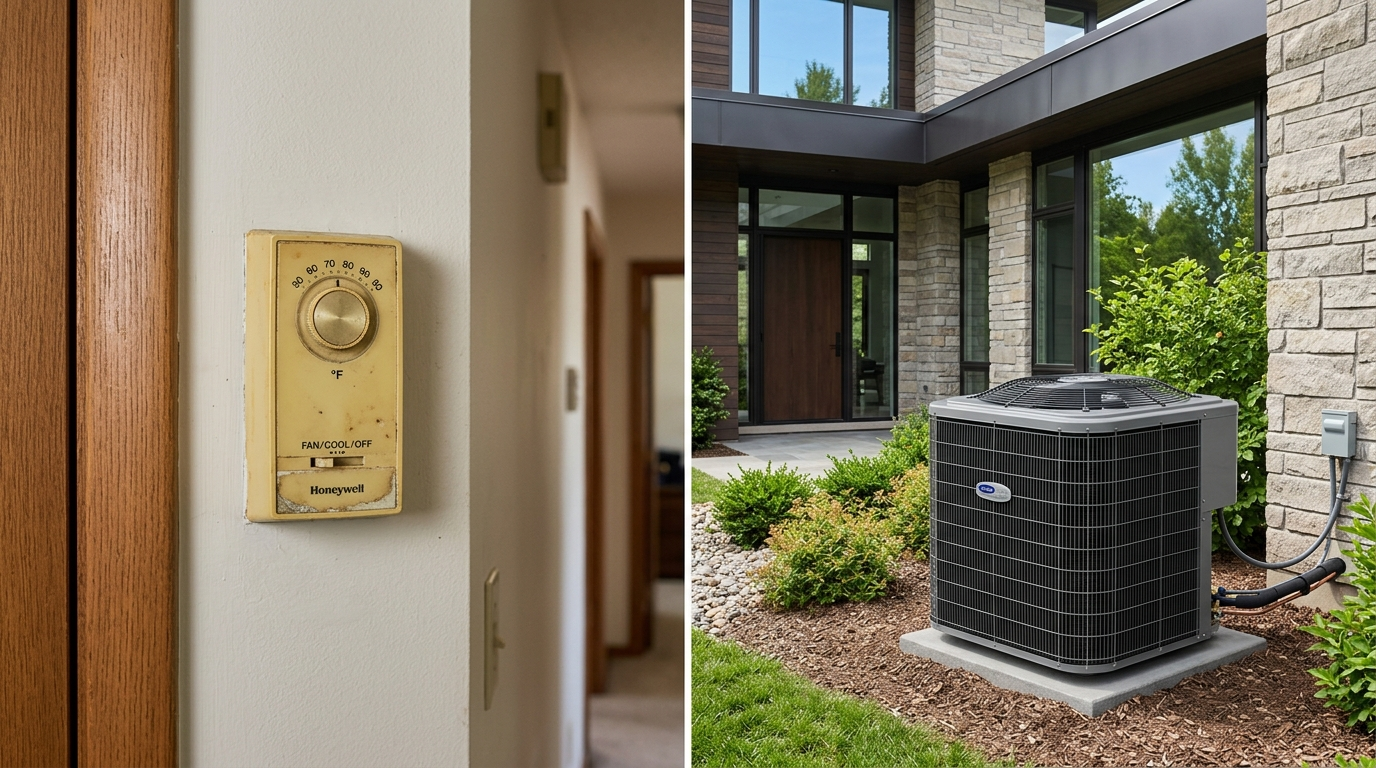
Both systems have an outdoor condenser, copper refrigerant lines, an indoor air handler, and a thermostat on the wall. From a distance, or from inside the house, they're indistinguishable. The difference is a single component inside the heat pump: a reversing valve.
That valve flips the direction of refrigerant flow. In cooling mode, it works exactly like a central AC, pulling heat out of your home and dumping it outside. In heating mode, it runs in reverse: pulling ambient heat from outdoor air (even at 20°F) and pumping it inside. A central AC can only move heat one direction. That mechanical difference is why heat pumps cost more upfront but eliminate the need for a separate furnace.
Summary
Heat pumps run $7,000–$16,000 installed; central AC runs $6,000–$12,500 (not including the furnace you'll still need). In mild climates, a heat pump replaces both systems and qualifies for up to $2,000 in federal tax credits. In cold northern climates where temperatures regularly drop below 30°F, a gas furnace is usually cheaper to operate through winter. Your local electricity-to-gas rate ratio is the deciding factor.
Cost ranges from Meazora 2026 installer data. Tax credit per IRS Section 25C (Inflation Reduction Act). Consult a tax professional for eligibility.
This article covers:
Why the upfront price gap between the two systems is smaller than it looks
The temperature threshold where heat pumps stop making financial sense
What SEER2 and HSPF2 ratings actually tell you (and what they don't)
The dual-fuel setup that works best in northern climates
Side-by-Side Comparison
Comparison Factor
Central AC + Furnace
Electric Heat Pump
What It Does
Cooling only (furnace heats separately)
Heating and cooling in one unit
Installed Cost
$6,000 - $12,500 (AC only)
$7,000 - $16,000 (replaces both)
Energy Source
Electricity (AC) + Gas or Oil (Furnace)
100% Electricity
Federal Tax Credit
None (unless high-SEER2 furnace)
Up to $2,000 (IRS Section 25C)
Avg. Lifespan
12 - 15 Years (AC) / 15 - 20 Years (Furnace)
10 - 15 Years
Cost ranges from Meazora 2026 installer data. Central AC cost shown does not include furnace. Lifespan estimates per DOE and CEE specifications.
The upfront cost comparison is often misleading. A central AC at $6,000–$12,500 sounds cheaper than a heat pump at $7,000–$16,000, until you add the furnace you still need alongside it. When you account for both systems, a heat pump is often the lower total installation cost, and you're maintaining one unit instead of two (estimate your system needs and budget with our HVAC replacement cost calculator).
Where Heat Pumps Win and Where They Don't
The U.S. Department of Energy divides the country into climate zones 1 through 8, with zone 1 being the hottest (southern Florida, Hawaii) and zone 8 being the coldest (interior Alaska). Heat pumps are the clear choice in zones 1 through 5. In zone 6 and above, the calculus shifts.
The reason is physics. Heat pumps extract heat from outdoor air. As outdoor temperatures fall, there's less heat to extract, and the system has to work harder for the same output. Standard heat pumps are rated to operate down to about 30°F before efficiency drops sharply. Below that threshold, they activate backup electric resistance heating coils, essentially electric space heaters inside your air handler, which are expensive to run.
Cold-climate heat pumps (sometimes called "hyper heat" models from Mitsubishi, Bosch, or Daikin) operate efficiently down to -15°F. They cost more upfront but solve the northern-climate problem. If your winters regularly push below 10°F, those models are worth pricing out.
Reading Efficiency Ratings: SEER2 and HSPF2
Both systems use SEER2 (Seasonal Energy Efficiency Ratio 2) to rate cooling efficiency. Higher numbers mean less electricity per cooling hour (to see how this impacts utility savings, check our guide on whether a new AC lowers your electric bill). The current federal minimum is 14.3 SEER2 for most of the U.S.; premium units reach 18–22 SEER2.
Heat pumps add a second rating: HSPF2 (Heating Seasonal Performance Factor 2), which measures heating efficiency over a full season. A rating of 8.5 or higher is considered high-efficiency. This number matters most if you're in a climate where you'll run the heat pump for heating a significant portion of the year.
One thing SEER2 doesn't tell you: how the system performs during the hottest hours of the hottest days. Peak demand performance varies between units even with the same rating. Ask your contractor for the EER2 (Energy Efficiency Ratio 2) figure, which reflects efficiency at peak conditions rather than seasonal averages.
The Tax Credit Question
Heat pumps that meet the efficiency thresholds set by the Inflation Reduction Act qualify for the IRS Section 25C tax credit, up to $2,000 per year for heat pumps and heat pump water heaters combined. Central ACs generally don't qualify unless paired with a qualifying high-efficiency furnace.
The credit is nonrefundable, meaning it reduces what you owe in taxes but won't generate a refund. Verify current thresholds and eligibility with a tax professional before factoring this into your decision: the qualifying efficiency minimums can change year to year.
To compare installed costs for both options against your home's square footage and climate zone, use our HVAC Cost Calculator.
Frequently Asked Questions
Does a heat pump work in cold climates?▼
Standard heat pumps lose efficiency below 30°F and fall back on expensive backup electric heat strips. Modern cold-climate heat pumps can operate down to -15°F, but cost more upfront. In northern states, a dual-fuel system, heat pump paired with a gas furnace, is often the most cost-effective setup. The heat pump runs during moderate weather; the furnace takes over when temperatures plunge.
How much can I save with a heat pump vs. a gas furnace?▼
In moderate climates (DOE climate zones 3–6), heat pumps typically cut heating costs by 30–50% compared to electric resistance heat. Compared to natural gas, the savings depend on local rates. Gas is generally cheaper in the Midwest and Northeast; heat pumps win in the Southeast and along the West Coast where electricity is relatively affordable.
§
Research Citations & Verified Authorities
EEAT Compliant
To maintain absolute calculation integrity and trust, the structural lifespans, standard sizes, and pricing models in this guide are gathered from governing construction authorities and verified trade standards.
U.S. Department of Energy - Heat Pump SystemsAudit Source →
Consortium for Energy Efficiency (CEE) - High-Efficiency HVAC SpecificationsAudit Source →
Mauricio L.
// Creator of Meazora
Mauricio L. is a software developer who loves working with his hands. He built Meazora because he was tired of online calculators that exist just to capture your email and phone number. Every calculator here runs completely in your browser to keep your planning private, fast, and simple.