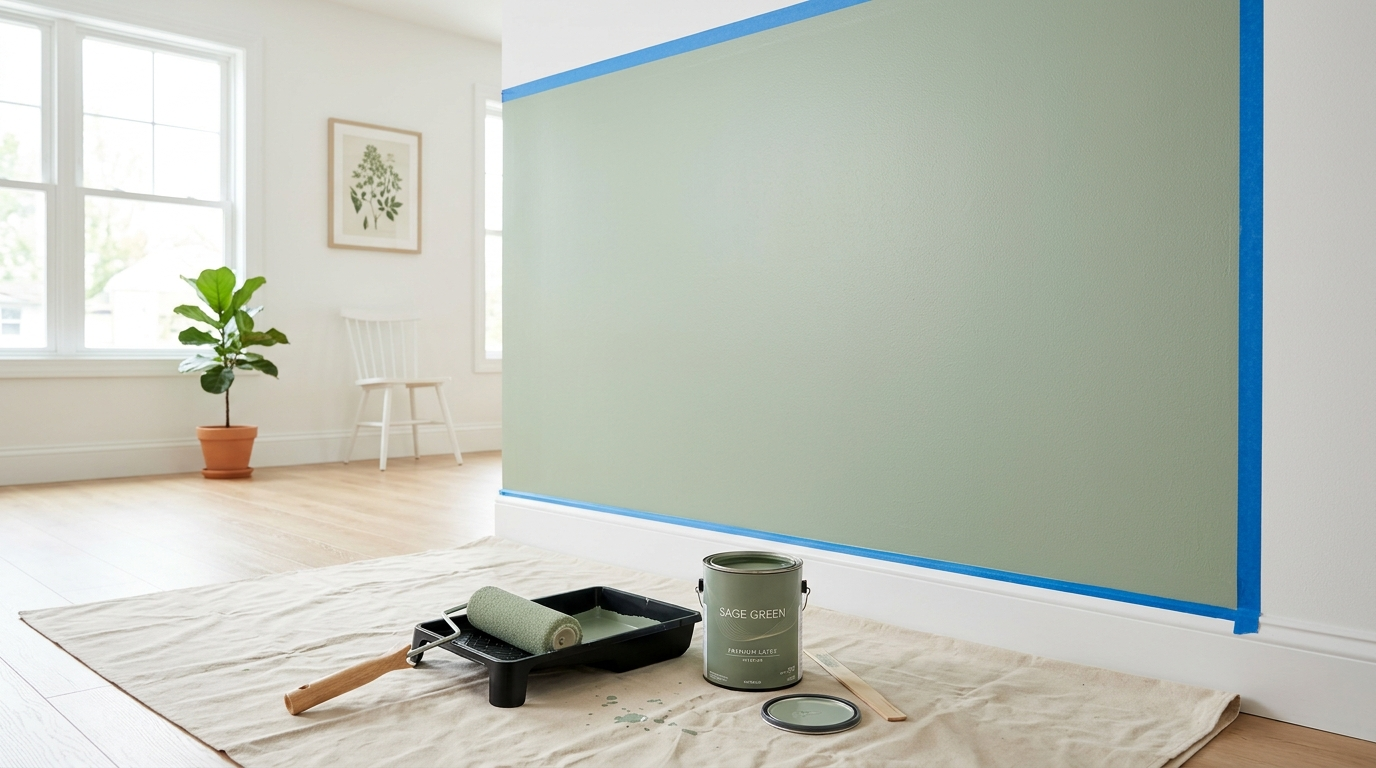
Paint coverage is listed on every can, typically 400 square feet per gallon for smooth surfaces, one coat. The actual coverage in a real room is usually lower, for three reasons: surface texture increases total surface area; two coats are required for most color changes; and new or porous surfaces absorb more paint than the coverage rate assumes.
The calculation isn't complicated, but where most homeowners go wrong is using the manufacturer's single-coat coverage figure and not adjusting for two coats and surface conditions. This guide walks through the full calculation.
What this article covers:
- The wall area formula and how to use it
- When to subtract windows and doors vs. when to skip the step
- Porous and textured surfaces: how much more paint they require
- When primer is required (and why it reduces total paint cost)
The Basic Paint Formula
Start with the perimeter of your room. Add up all four wall lengths, then multiply by the ceiling height. This gives you the total wall area before subtracting openings.
Wall Area = (Length + Width) × 2 × Ceiling Height
For a 12×12 room with 8-foot ceilings: (12 + 12) × 2 × 8 = 384 square feet of wall area.
Now subtract windows and doors. A standard interior door is 21 square feet (3×7). A typical window is 15 square feet (3×5). If your room has one door and two windows, subtract 51 square feet: 384 - 51 = 333 square feet of paintable surface.
Dry Drywall and Raw Plaster: The Thirsty Wall Problem
New drywall is essentially paper and gypsum dust, which acts like a massive sponge. If you roll paint directly onto raw drywall or sanded joint compound, it sucks the moisture out of the paint immediately. This rapid absorption ruins the finish, causing splotchy sheens (known as flashing) and weak adhesion that leads to peeling down the road.
Applying a dedicated PVA (polyvinyl acetate) drywall primer is crucial. PVA primer seals the pores, creating a uniform, non-porous foundation. Skimping on primer doesn't save money; you'll simply end up needing three or four coats of expensive color paint instead of two.
Plaster walls are even more demanding. Fresh plaster is highly alkaline and can take weeks to cure. If you paint too soon, the high pH will chemically break down latex binders, causing the paint to blister and flake. An alkali-resistant acrylic primer is a necessity here.
Skip the Paint Math
Input your wall dimensions, doors, and windows to get an instant gallon estimate for one or two coats using our free Paint Calculator.
Go to Paint Calculator
Textured Walls: The Hidden Paint Eaters
Smooth drywall yields the standard 400 square feet per gallon. But textured walls, orange peel, knockdown, or heavy plaster, can cut coverage by 30-50%. The peaks and valleys of texture create vastly more surface area than a flat wall.
If your walls have heavy texture, plan on 250-300 square feet per gallon instead of 400. It's better to have leftover paint than to run short and risk a visible color mismatch when buying a second batch.
Example: 12×12 Bedroom Calculation
Let's walk through a real example:
- Room: 12×12 feet with 8-foot ceilings
- Walls: (12 + 12) × 2 × 8 = 384 sq ft
- Subtract: 1 door (21 sq ft) + 2 windows (30 sq ft) = 51 sq ft
- Paintable area: 384 - 51 = 333 sq ft
- Two coats: 333 × 2 = 666 sq ft total
- Gallons needed: 666 ÷ 400 = 1.67 gallons (round up to 2 gallons)
Always buy all cans from the same manufacturer's batch. Minor pigment variances between production batches can produce visible color differences on large wall surfaces, particularly noticeable in flat and matte finishes. When purchasing multiple cans, confirm the batch number printed on the lid before leaving the store.
Use our Paint Calculator to estimate gallon counts for your room dimensions, finish type, and number of coats.