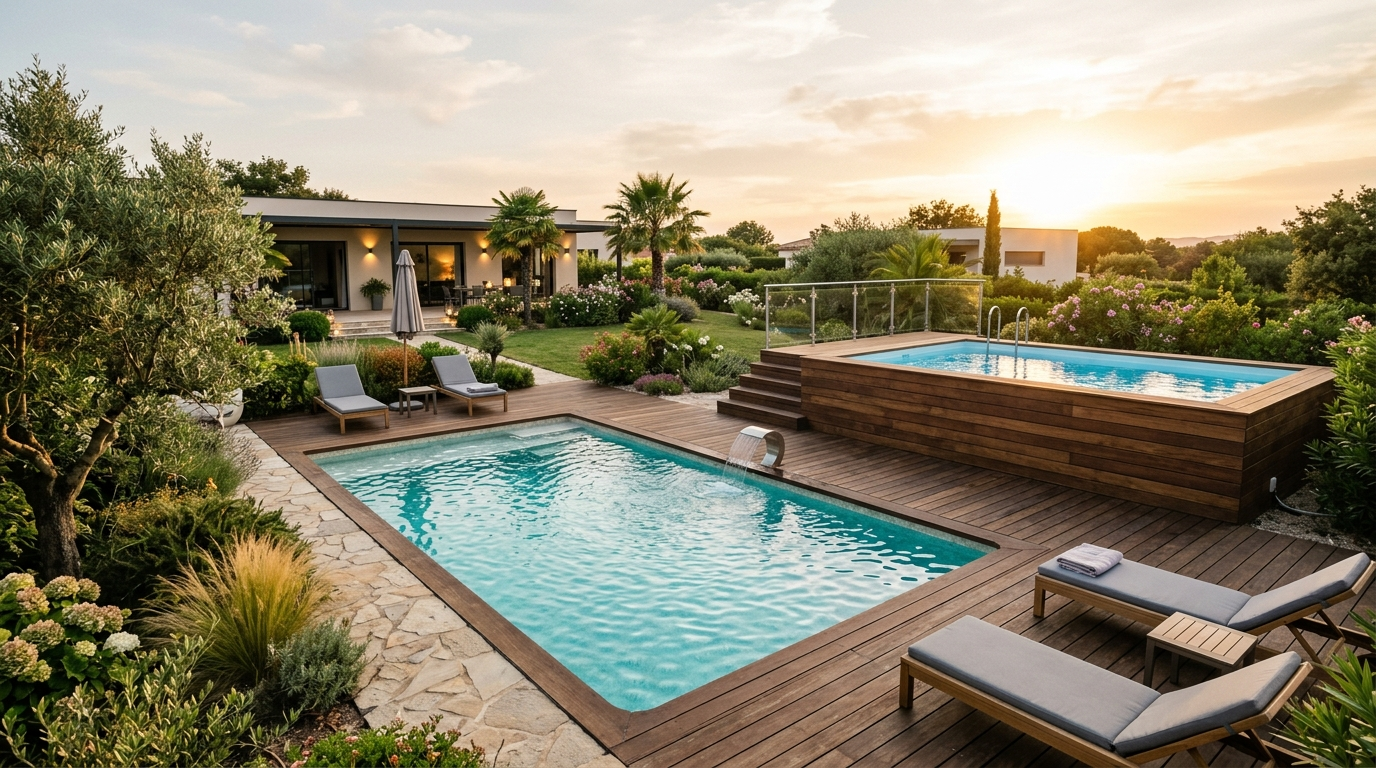
The installed cost difference between in-ground and above-ground pools is roughly 10-to-1: $45,000–$85,000 for in-ground versus $3,000–$10,000 for above-ground. But the structural difference goes beyond price. In-ground pools are permanent improvements to real property; above-ground pools are classified as personal property, similar to furniture, and move with the owner when the home sells.
The question of which to choose depends on three variables: how long you plan to stay in the home, what climate you're in, and whether the pool's value to you is primarily recreational or also financial.
What this article covers:
- In-ground pool cost breakdown by component
- Above-ground pool cost and lifespan by model tier
- 10-year total cost of ownership comparison
- How climate affects in-ground pool value and usability
In-Ground Pools: The Premium Investment
Installed cost: $45,000-$85,000 for a basic 12x24 ft pool. Luxury features (spa, waterfall, heating, saltwater systems) push this to $100,000+.
What you're paying for:
- Excavation: $10,000-$20,000. Heavy equipment digs the hole, hauls away dirt (note that this machinery will damage surrounding turf; plan restoration with our lawn sodding and reseeding guide).
- Structure: Concrete/gunite ($50,000-$70,000), fiberglass ($35,000-$55,000), or vinyl liner ($30,000-$45,000).
- Plumbing and electrical: $5,000-$10,000. Pumps, filters, heaters, lighting, automation.
- Decking: $5,000-$15,000. Concrete, pavers, or natural stone surrounding the pool. (If building a wooden or composite pool deck, you can budget construction with our deck cost calculator).
- Permits and inspections: $1,000-$3,000. Most municipalities require engineering plans and multiple inspections.
Timeline: 8-16 weeks from contract to completion. Concrete pools take longest (curing time). Fiberglass installs fastest (pre-manufactured shell drops in one piece).
- Massive upfront cost: $45,000-$85,000 is a second mortgage for most families.
- High maintenance: $2,000-$4,000/year (chemicals, electricity, cleaning, repairs).
- Increases insurance: $200-$500/year additional premium (liability risk).
- May deter buyers: Families with young children or buyers who don't want maintenance may skip your home.
- Permit headaches: Engineering, zoning, HOA approval, fencing requirements.
Above-Ground Pools: The Budget Alternative
Installed cost: $3,000-$10,000 for a complete setup.
What you're paying for:
- Pool kit: $2,000-$7,000. Includes walls, liner, filter pump, ladder.
- Ground preparation: $500-$2,000. Leveling, sand base, or concrete pad.
- Electrical: $500-$1,500. Dedicated circuit for pump (required by code).
- Optional decking: $1,000-$5,000. Surround deck for aesthetics and access.
Timeline: 1-3 days for DIY installation. 1-2 weeks if hiring contractors for site prep and electrical.
- Zero resale value: Considered personal property, like furniture. Doesn't increase home value.
- Short lifespan: 5-10 years for budget models, 10-15 years for premium.
- Limited features: No deep ends, diving boards, or integrated spas.
- Aesthetic limitations: Looks temporary. Difficult to integrate with landscaping.
- Shallow water: Typically 4-5 feet deep. Not suitable for diving or serious lap swimming.
- May deter buyers: Some buyers see it as an eyesore or liability.
True Cost of Ownership: 10-Year Comparison
Initial cost is just the beginning. Here's the full 10-year picture:
- Initial cost: $6,000 (average)
- Maintenance (10 years): $7,500 ($750/year)
- Liner replacement: $700 (once in 10 years)
- Potential replacement: $6,000 (if pool doesn't last 10 years)
- Total 10-year cost: $13,200-$19,200
- Value added to home: $0
- Net cost: $13,200-$19,200
Over 10 years, in-ground pools cost 4-5x more than above-ground. But in-ground pools provide a superior experience and can partially recoup costs at resale.
Climate Matters More Than You Think
Warm climates (Florida, Arizona, Southern California, Texas): In-ground pools add value because they're usable 8-12 months per year. Buyers expect and appreciate them.
Cold climates (Northeast, Midwest, Pacific Northwest): In-ground pools are usable 3-4 months per year. Many buyers see them as liabilities (maintenance, safety, heating costs). Above-ground pools make more financial sense: you get seasonal fun without permanent commitment.
Choosing Based on Climate and Timeline
In warm-climate markets (Florida, Arizona, Southern California, coastal Texas), in-ground pools are usable 8–12 months per year and are commonly expected by buyers in the $400,000+ price range. The value addition per APSP data runs 5–8% of home value in these markets, making the financial case more defensible.
In cold-climate markets (Northeast, upper Midwest, Pacific Northwest), the same pool is usable 3–4 months per year. Buyers often view in-ground pools as maintenance obligations rather than amenities, and the value impact is neutral to negative in many submarkets. Above-ground pools address seasonal recreational needs without a permanent capital commitment.
Regardless of pool type, confirm local fencing and barrier requirements before purchase. Most jurisdictions require a continuous fence with a self-latching gate around residential pools under the International Residential Code (IRC Section AG105) and state pool safety statutes. These requirements apply to above-ground pools in most states as well. Permit and fence requirements add $1,000–$5,000 to any pool installation.