Wind-Rated Garage Doors: Requirements, Costs, and Building Codes (2026)
Published: June 23, 2026Updated: June 28, 2026Read Time: 8 min readBy Mauricio L.
Share:
Link Copied!Ready to share.
Single Door (Wind-Rated)$1,000-$2,500
Double Door (Wind-Rated)$2,000-$4,500
Wind Load Rating110-180 mph
Code Required InCoastal high-velocity zones
Highlights
[ NOTE // 01 ]
Wind-rated garage doors cost $1,000-$4,500 installed (vs $800-$2,500 for standard). Required in hurricane-prone regions (Florida, Texas coast, Carolinas). Must withstand 110-180 mph winds depending on zone. Building codes enforce strict requirements.
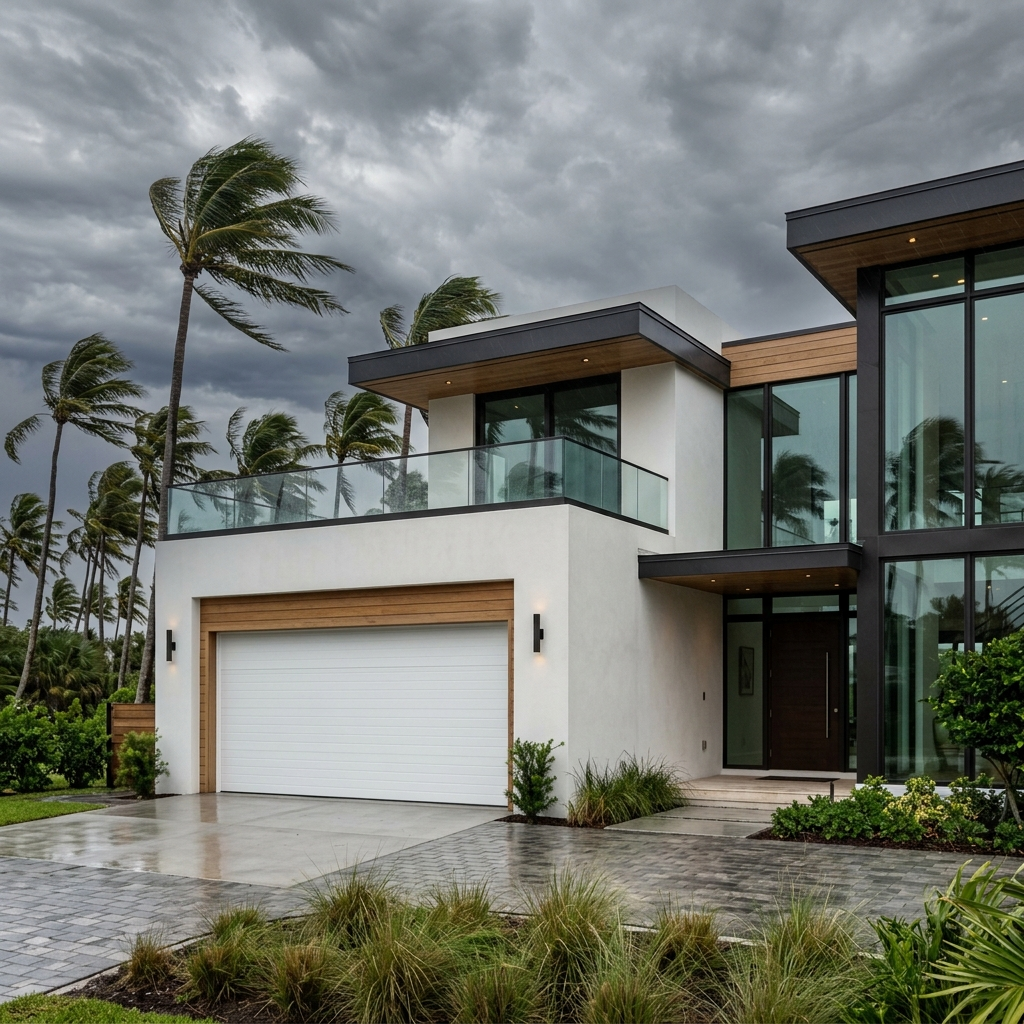
Hurricane Andrew changed everything. When it slammed South Florida in 1992 as a Category 5 storm, wind speeds exceeded 165 mph. Thousands of homes suffered catastrophic damage, not from direct wind impact, but from pressure differentials caused by garage door failure.
Here's what happens: Wind hits the garage door. If the door fails (buckles, collapses, or gets ripped off), wind rushes into the garage. This pressurizes the interior of the house. Now wind is pushing OUT on the walls and roof from the inside while pushing IN from the outside. The result? Roof lift-off, wall collapse, and structural failure. (To secure the rest of your home, review our 2026 hurricane season home prep guide).
Building codes responded by requiring wind-rated garage doors in hurricane-prone regions. These doors aren't just "stronger": they're engineered and tested to withstand specific wind pressures without failing. And in many coastal areas, they're not optional.
When Are Wind-Rated Doors Required?
Building codes (International Residential Code and state-specific adaptations) require wind-rated garage doors in:
Florida: All coastal counties (Miami-Dade, Broward, Palm Beach, etc.) and inland areas in wind-borne debris regions.
North & South Carolina: Coastal counties within 1 mile of the shoreline.
Louisiana: Coastal parishes subject to hurricane-force winds.
Other areas: Any region designated as a "high-velocity hurricane zone" or "wind-borne debris region" by local building codes.
Your local building department determines requirements based on wind zone maps. If you're in a zone with 110+ mph design wind speeds, you likely need a wind-rated door.
Understanding Wind Load Ratings
Wind-rated doors are tested and certified to withstand specific wind pressures, measured in pounds per square foot (psf) or equivalent wind speed (mph):
110-120 mph: Minimum requirement for many coastal areas. Suitable for regions with moderate hurricane risk.
130-140 mph: Common requirement for Florida and Texas coastal counties.
150-160 mph: Required for high-velocity zones (Miami-Dade, Broward counties).
170-180+ mph: Premium doors for extreme exposure areas or critical structures.
Doors are tested in accordance with ASTM E330 (structural performance) and ASTM E1996 (impact resistance for debris zones). Look for certification labels from Miami-Dade County (NOTICE OF ACCEPTANCE) or Florida Product Approval: these are the gold standards.
Wind-Rated vs Standard Doors: What's Different?
Wind-rated doors have several key reinforcements:
Thicker materials: 24-26 gauge steel vs 28-30 gauge for standard doors. Some use aluminum or composite materials.
Reinforced panels: Horizontal struts or vertical stiffeners prevent panel flexing under pressure.
Heavy-duty hinges: Reinforced hinges with more attachment points to prevent pull-out.
Stronger tracks: Thicker gauge steel tracks with closer hanger spacing (every 2-3 feet vs every 4-5 feet).
Reinforced bottom bracket: The bottom bracket (where the cable attaches) is a common failure point. Wind-rated doors have reinforced brackets.
Impact-resistant options: In debris zones, doors must also pass missile impact tests (2x4 lumber shot at 50+ fps; learn how these requirements compare to other openings in our impact windows vs hurricane shutters guide).
These reinforcements add weight, which requires stronger springs and openers. The entire system is engineered for wind resistance, not just the door panels.
Cost Comparison: Wind-Rated vs Standard
Wind-rated doors cost 30-50% more than standard doors:
Standard single door: $800-$2,500 installed
Wind-rated single door: $1,000-$2,500 installed
Standard double door: $1,200-$3,500 installed
Wind-rated double door: $2,000-$4,500 installed
Impact-rated doors (tested for debris zones) cost an additional 20-30%. Expect $2,500-$5,500 for a double door with impact certification.
Installation and Code Compliance
In areas where wind-rated doors are required, you'll need:
Building permit: Required for garage door replacement in most coastal jurisdictions.
Product approval documentation: Manufacturer's certification showing the door meets wind load requirements for your zone.
Final inspection: Building inspector verifies proper installation and checks certification labels.
Wind load calculation: Engineer or manufacturer specifies required design pressure (DP) rating based on your home's location and exposure.
Don't skip the permit. Unpermitted installations can result in fines, forced removal, and insurance claim denials if the door fails during a storm.
Insurance Implications
Installing a wind-rated garage door may qualify for insurance discounts:
Florida: Up to 10% discount on windstorm premium for approved hurricane protection (including garage doors).
Texas: Some carriers offer 5-15% discounts for wind-rated doors in coastal counties.
Other states: Discounts vary. Ask your agent about "wind mitigation" credits.
To qualify, you'll need documentation (product certification, installation receipt, inspection report) submitted to your insurer. The discount may not fully offset the door's cost, but it helps over time.
Can You Use a Standard Door in a Wind Zone?
Technically, yes, if your local building department allows it. But:
Code violation: Most coastal jurisdictions require wind-rated doors for replacements. Installing a standard door fails inspection.
Insurance issues: If a standard door fails during a storm and causes structural damage, your insurer may deny the claim for "failure to mitigate" or code non-compliance.
Resale complications: Home inspectors flag non-compliant doors. Buyers may demand replacement before closing.
The cost difference isn't worth the risk. Install a wind-rated door if you're in a required zone.
Retrofitting Existing Doors
Some manufacturers offer wind load retrofit kits that include:
Reinforced hinges and brackets
Track bracing and closer hanger spacing
Stronger springs and cables
Panel stiffeners or struts
Retrofitting costs $300-$800 in parts plus labor. However, retrofitted doors rarely meet current code requirements for high-velocity zones. They're a stopgap solution, not a compliance solution. Full replacement is usually necessary.
Summary: Why Wind-Rated Doors Are Worth It
If you live in a hurricane-prone area, wind-rated garage doors aren't optional: they're code-required safety equipment. The extra cost ($500-$1,500 over standard doors) buys structural integrity that protects your entire home from catastrophic failure.
When replacing your door, verify wind load requirements with your local building department, choose a door with appropriate certification (Miami-Dade NOA or Florida Product Approval), and pull the required permits. The paperwork protects you, and your investment, long term.
Frequently Asked Questions
Do I legally need a wind-rated garage door?▼
If you live in a designated hurricane-prone region (Florida coast, Texas Gulf Coast, Carolinas, parts of Louisiana), building codes require wind-rated doors for new construction and replacements. Check your local building department, requirements vary by wind zone.
What's the difference between wind-rated and standard doors?▼
Wind-rated doors have reinforced panels (thicker steel or aluminum), stronger tracks and rollers, reinforced hinges, and heavy-duty bottom brackets. They're tested to withstand specific wind pressures (e.g., 150 mph) without failing. Standard doors aren't tested or reinforced for high winds.
Can I retrofit my existing door for wind resistance?▼
Some doors can be retrofitted with wind load kits (reinforced hinges, track bracing, stronger springs). However, retrofitted doors rarely meet code requirements for new installations. Full replacement is usually necessary for compliance in high-velocity zones.
§
Research Citations & Verified Authorities
EEAT Compliant
To maintain absolute calculation integrity and trust, the structural lifespans, standard sizes, and pricing models in this guide are gathered from governing construction authorities and verified trade standards.
International Building Code (IBC) - Wind Load ProvisionsAudit Source →
Florida Building Code - Hurricane Protection StandardsAudit Source →
Door & Door Access Systems Manufacturers Association (DASMA)Audit Source →
Mauricio L.
// Creator of Meazora
Mauricio L. is a software developer who loves working with his hands. He built Meazora because he was tired of online calculators that exist just to capture your email and phone number. Every calculator here runs completely in your browser to keep your planning private, fast, and simple.