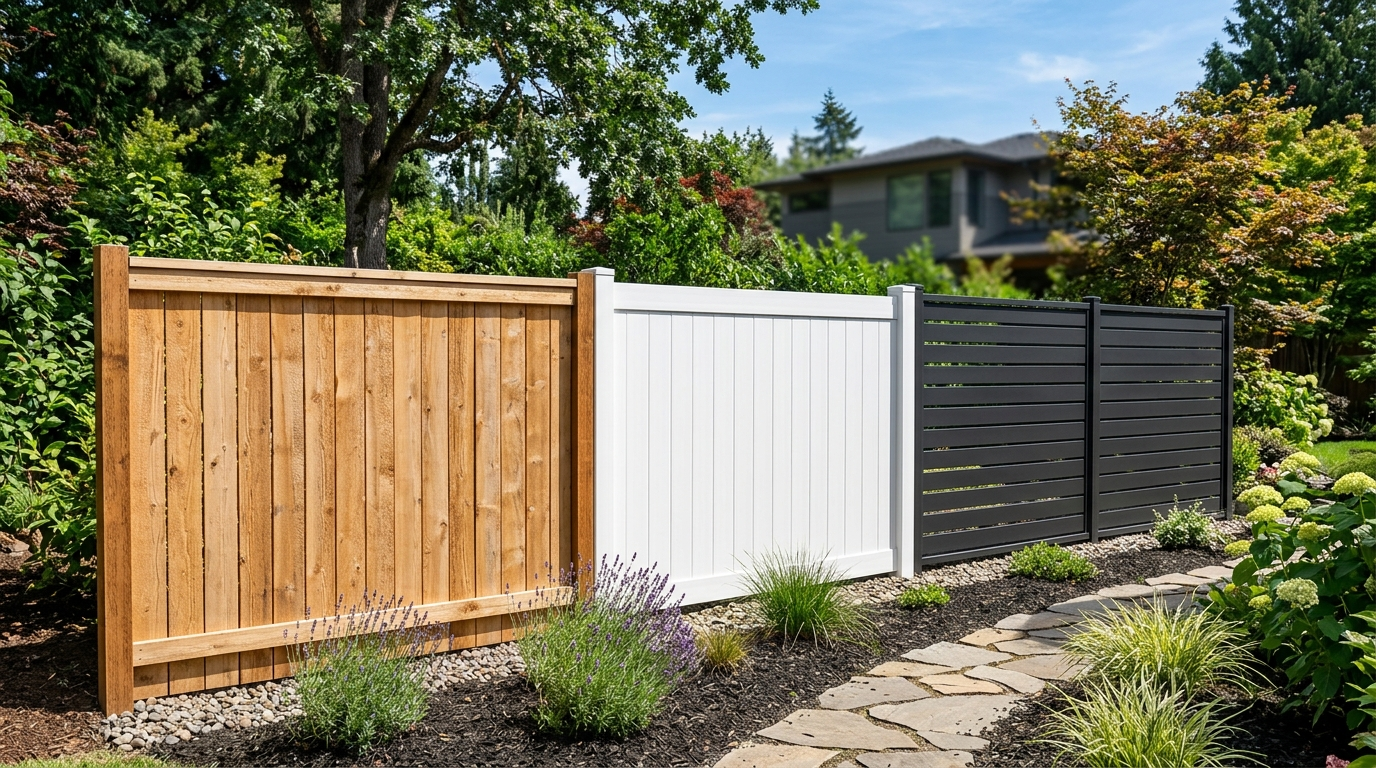
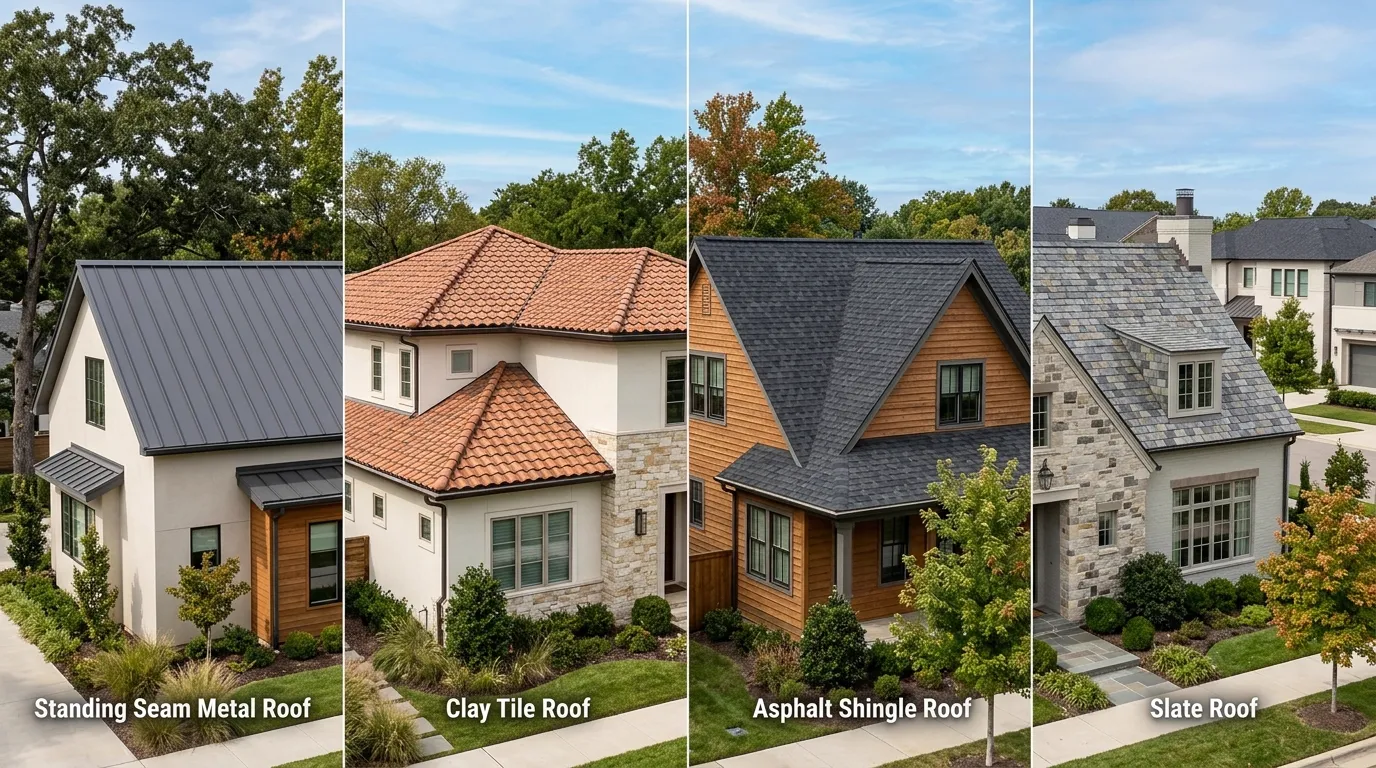
Fence selection comes down to two costs that move in opposite directions: upfront installation and long-term maintenance. Wood is cheapest to install and most expensive to maintain. Aluminum is most expensive to install and needs almost no maintenance after that. Vinyl sits between them on both axes.
The right choice depends on which cost matters more for your situation, and on a few installation factors that don't show up in any per-linear-foot price.
Cost ranges from Meazora 2026 installer data. Lifespans per American Fence Association guidelines.
The lifespan gap between wood and aluminum is the key number in that table. A cedar fence at $18–$35/LF that needs replacement in 12 years costs more over 30 years than an aluminum fence at $30–$65/LF that lasts the full period without maintenance. For longer properties where linear footage adds up (you can compute your measurements using our fence calculator), this math becomes significant.
Wood: What the Maintenance Schedule Means in Practice
Western red cedar is the standard choice for wood privacy fencing. It contains natural oils that inhibit rot and repel insects, properties that pressure-treated pine doesn't match for above-ground exposure. But cedar is still organic material that responds to moisture and UV.
Without staining, cedar turns gray in 2–3 years and begins checking (surface cracking) as it repeatedly wets and dries. After 8–10 years of no maintenance, the boards will split and the structural integrity of the fence degrades. With regular staining every 2–3 years, cedar can reach 15–20 years of service.
If you're comparing bids, pressure-treated pine fencing is often offered as a lower-cost alternative to cedar. It costs less per board, but it doesn't hold stain as well, and the treatment chemicals can cause fasteners to corrode faster, a relevant consideration for longevity.
Vinyl in Cold Climates: The Brittleness Factor
PVC becomes more brittle at low temperatures. In climates where temperatures regularly drop below 20°F, vinyl panels and posts are more susceptible to cracking from impact, a falling branch, a snowplow's deflected snow, a child's errant throw. The damage is typically localized to the point of impact but requires panel replacement since vinyl can't be repaired in place.
In moderate climates, this is rarely an issue. In the upper Midwest and northern New England, it's worth factoring into the material choice. Aluminum doesn't share this limitation.
Why Privacy Panels Behave Differently in Wind Than Open Pickets
A solid privacy fence, wood or vinyl, acts like a wall when wind hits it. The fence captures the full wind load and transfers it to the posts. In areas with regular high-wind events, this requires deeper post footings and more concrete than an equivalent run of open-picket aluminum, which lets wind pass through the gaps between pickets.
For a 6-foot solid privacy fence in a storm-prone area, post holes should be a minimum of 30–36 inches deep with concrete footings that extend below the local frost line. Your local building department can provide the specific frost line depth for your area.
The Frost Line: Why Post Depth Varies by State
In northern climates, soil freezes to a significant depth in winter. When frozen soil expands, it exerts upward pressure on anything embedded in it, a phenomenon called frost heave. If a post footing sits above the frost line, freeze-thaw cycles will push it upward over time, tilting the fence and making gates impossible to latch.
Frost line depth varies from a few inches in southern states to 48–60 inches in northern Minnesota and Maine. Your local building permit office will specify the required depth; most fencing permits include this in the code requirements. Confirm before installation, digging to the wrong depth is an expensive correction after the concrete is poured.
Permits and Property Lines: Confirm Before You Build
Installing a fence even a few inches over your property line can result in a legal dispute requiring you to remove and rebuild at your expense. Before ordering materials, locate your property pins: the metal survey stakes at your corners. If you can't find them, a property survey costs $400–$800 but eliminates the risk entirely.
Most municipalities require a permit for fences above a certain height. Submit your application before purchasing materials, if the permit is denied or requires modifications, your material order may not match the approved design.
Use our Fence Calculator to estimate post count, rail sections, picket quantities, and concrete bags for your project's linear footage before requesting bids.