Which Home Renovations Actually Pay Back at Resale?
Published: June 24, 2026Updated: June 30, 2026Read Time: 9 min readBy Mauricio L.
Share:
Link Copied!Ready to share.
Budget Kitchen ROI75%-82%
Mid-Range Kitchen ROI55%-62%
Deck Addition ROI65%-72%
Roof Replacement ROI60%-70%
Highlights
[ NOTE // 01 ]
According to the Remodeling Magazine Cost vs. Value Report, budget kitchen remodels ($12,000–$25,000) return 75–85% at resale. Mid-range bathroom updates return 60–70%. Roof replacement and window replacement typically return 60–70% each. Luxury renovations and swimming pools consistently return well below their cost. The most reliable rule: renovate to match your neighborhood, not to exceed it.
The Remodeling Magazine Cost vs. Value Report tracks actual return on investment data for home improvements across markets nationwide. The pattern that shows up year after year: the projects with the highest ROI are rarely the flashiest ones. A minor kitchen update consistently outperforms a full luxury gut renovation in percentage returned. A new roof, unglamorous, expensive, invisible from inside the house, typically returns 60–70 cents on the dollar and removes a major objection from the inspection process.
ROI isn't just about the renovation itself. It's about the relationship between your project cost and what comparable homes in your area sell for. That context determines everything.
Summary
Budget kitchen remodels return 75–82% at resale; mid-range kitchen renovations return 55–62%. Bathrooms, decks, roofs, and window replacement cluster around 60–72%. Luxury upgrades, pools, and room conversions consistently underperform. The most reliable signal for where to stop: when your renovation would push your asking price more than 10–15% above comparable homes in your neighborhood.
ROI figures from Remodeling Magazine Cost vs. Value Report 2026 and NAR Remodeling Impact Report. Returns vary by market, project quality, and local buyer preferences.
What this article covers:
Which projects lead in ROI, and why the cheaper version of each often outperforms the expensive one
What buyers actually respond to at walkthrough (vs. what feels valuable to the owner)
The over-improvement trap and how to recognize your neighborhood's ceiling
Projects to skip entirely when selling is the goal
Kitchen Remodel: Where Budget Beats Luxury
The counterintuitive finding from Cost vs. Value data year after year: a minor kitchen update ($12,000–$25,000) returns 75–82% at resale. A major mid-range remodel ($25,000–$65,000) returns 55–62%. Spend more, get less back. You can calculate options on our kitchen remodel cost calculator or learn more in our kitchen remodel cost guide.
The reason is what buyers are actually evaluating. At walkthrough, a buyer wants to see a kitchen that feels clean, updated, and functional. Cabinet refacing instead of full replacement, new countertops (quartz or granite), updated hardware and lighting, and a modern faucet all deliver that impression at a fraction of the cost of a gut renovation.
The items to skip for resale: wine fridges, warming drawers, built-in espresso systems, and restaurant-grade appliances. These appeal to a narrow group of buyers and add cost without broadening the pool.
Bathroom: The Make-or-Break Room for Buyers
Bathrooms are expensive per square foot, but buyers register them quickly at walkthrough. An outdated bathroom with worn tile and old fixtures reads as deferred maintenance, which makes buyers wonder what else hasn't been addressed. A clean, modern bathroom signals the opposite.
Budget bathroom updates ($5,000–$12,000) and mid-range remodels ($12,000–$28,000) both return in the 60–70% range, according to NAR data. The diminishing returns on luxury finishes (heated floors, steam showers, custom tilework) hold here too. If you're selling, focus on a functional, neutral update, not a personal sanctuary (budget your space with our bathroom remodel cost calculator and review our bathroom remodel cost guide).
One specific note on tub removal: if a home's only full bath has a tub, removing it typically reduces buyer pool. Families with young children need tubs. A separate soaking tub in a master suite is a different calculation: many buyers with no children view it as wasted space.
Roof and Windows: Not Glamorous, But Strategically Important
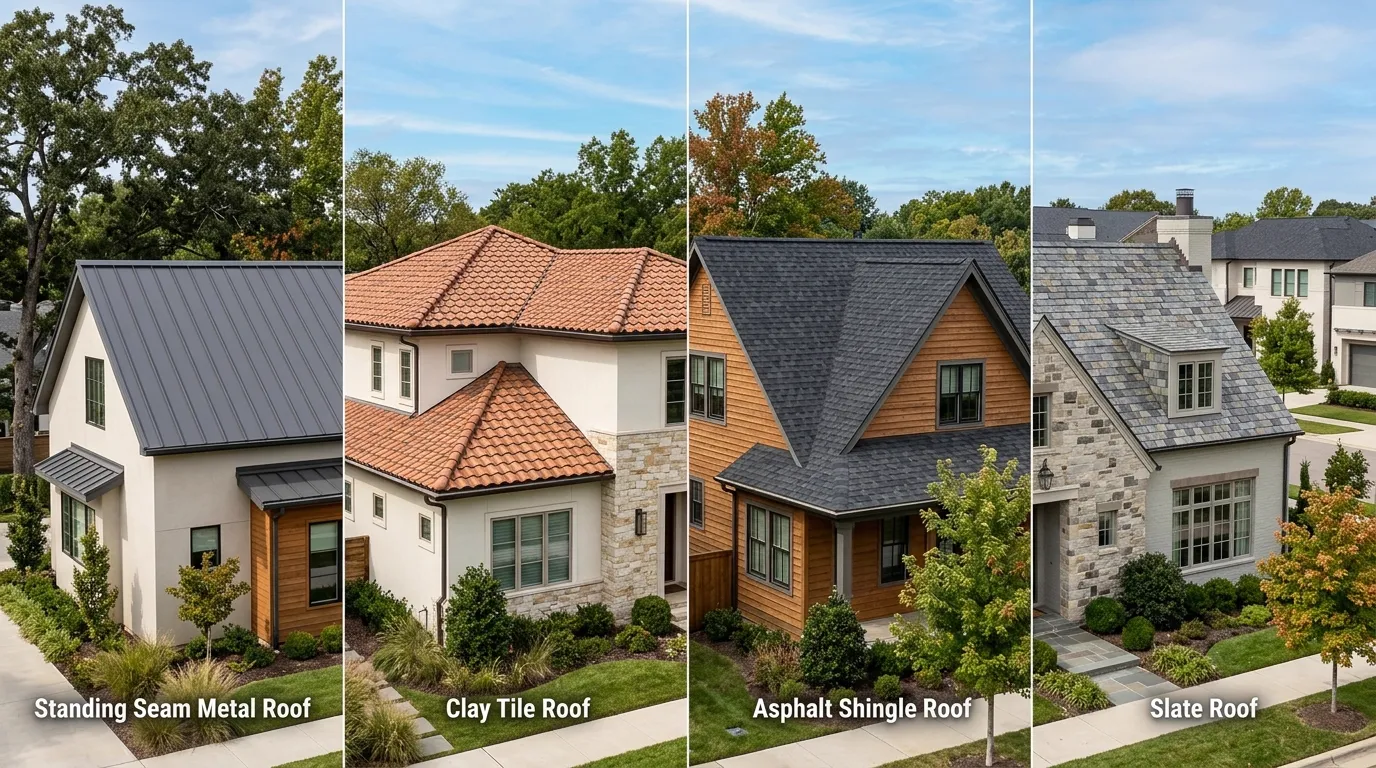
A new roof doesn't create excitement at a showing, but a flagged roof absolutely creates friction at inspection. Buyers request credits, lenders sometimes require repairs before funding, and some deals fall apart. A pre-listing roof replacement eliminates the negotiation point entirely and reassures buyers that the home has been maintained. (Calculate your budget with our roof replacement cost calculator and check out the roof lifespan guide).
Similarly, old single-pane windows with failed seals (visible as fogging between panes) or visible frame deterioration signal energy inefficiency and deferred maintenance. Energy-efficient replacement windows, vinyl or fiberglass frames, double-pane low-e glass, improve how the home feels, reduce drafts, and show well. Both projects typically return 60–70% at resale per Cost vs. Value data. (See our window replacement cost calculator and review the window replacement cost guide).
Deck Addition: Outdoor Space With Solid Returns
Deck additions return 65–72% for wood construction per the Cost vs. Value Report. Composite decking costs more upfront but requires less maintenance and appeals to buyers who don't want ongoing staining and sealing commitments.
Return depends significantly on climate and lot. In markets where outdoor living is a year-round feature, a deck adds meaningful value. In cold-weather markets with short usable seasons, the return is lower.
Projects That Consistently Underperform at Resale
In-ground swimming pools carry high installation costs and ongoing maintenance that reduces buyer pool rather than expanding it. Some buyers treat a pool as a safety liability, especially households with young children. Others simply don't want the upkeep. In warm-climate markets, Florida, Arizona, parts of California, pools are more expected and return better. In most of the country, they're a personal amenity, not a resale investment.
Garage conversions and bedroom eliminations reduce functional room count, which directly affects how your home is priced against comps. Buyers expect garages in markets where garages are standard. Converting one to a home gym or bonus room removes a feature that most buyers are specifically searching for.
Personalized design choices that reflect your specific taste, bold wallpaper, unconventional color palettes, unusual materials, narrow your buyer pool. Neutral, timeless finishes appeal to more buyers and require less imagination from them at walkthrough.
The Over-Improvement Ceiling
Every neighborhood has a ceiling, a price point above which homes don't sell, regardless of what's inside them. Buyers shopping in a given area compare your home to others in the same price range. If your renovation pushes your asking price significantly above comparable homes, those buyers move on to less expensive options, and buyers looking in your new price range expect the neighborhood, lot, and overall quality to match the number they're paying.
The practical check: before starting any renovation with resale in mind, look at what homes within 10–15% of your target sale price actually look like. Those homes define your renovation ceiling. Matching them costs less than exceeding them, and typically returns more.
Use our Home Improvement ROI Calculator to compare potential return across different project types for your home's value range.
Frequently Asked Questions
Should I renovate before selling or sell as-is?▼
It depends on your market and scope. Minor updates, paint, flooring, landscaping, often return more than their cost because they improve how the home shows without large upfront spending. Major renovations rarely return 100%, but can shorten time on market. In a strong seller's market, many homeowners do better pricing the home with its current condition reflected and letting buyers customize. Get a comparative market analysis from a local agent before committing to a renovation budget.
What's the most common mistake when renovating for resale?▼
Over-improving for the neighborhood. Buyers compare your home to others in the same price range, not to the renovation you put in. A high-end kitchen in a mid-range neighborhood will not push your sale price into a higher tier. The investment simply won't be returned because comparable homes around you anchor buyer expectations.
How long before a renovation loses its value for a future sale?▼
Kitchens and bathrooms start feeling dated to buyers around the 10–15 year mark. Flooring and paint tend to show age after 5–10 years. Roofs and HVAC systems hold their appeal until they approach end of service life, because buyers (and their inspectors) specifically look at age and remaining useful life for those systems.
§
Research Citations & Verified Authorities
EEAT Compliant
To maintain absolute calculation integrity and trust, the structural lifespans, standard sizes, and pricing models in this guide are gathered from governing construction authorities and verified trade standards.
Remodeling Magazine - Cost vs. Value Report 2026Audit Source →
National Association of Realtors (NAR) - Remodeling Impact ReportAudit Source →
Mauricio L.
// Creator of Meazora
Mauricio L. is a software developer who loves working with his hands. He built Meazora because he was tired of online calculators that exist just to capture your email and phone number. Every calculator here runs completely in your browser to keep your planning private, fast, and simple.